
Workplace getting prepared!

Prepare your Business for an Earthquake
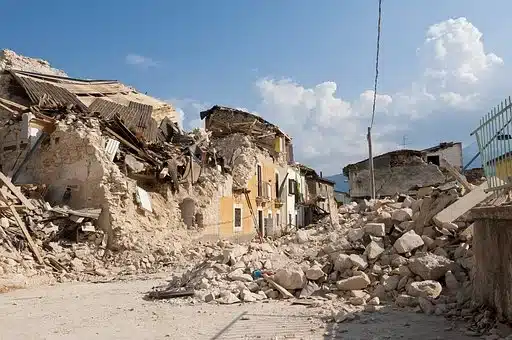
Are you and your business prepared for an earthquake? At the end of every October, the Emergency Preparedness for Industry & Commerce Council (EPICC) hosts a conference for emergency management professionals across Canada. It’s an amazing event for industry pros to learn the latest and greatest research and theories. The best part? The food is incredible.

I thought I would share some of their knowledge and enthusiasm here. Generally speaking, we’ll be going over the highlights and key points of this document, published by EPICC and the Institute for Catastrophic Loss Reduction (ICLR). However, If you’re up to absorbing 29 pages, it’s worth the time to read in full.

The EPICC guide is designed to minimize losses in the event of a major earthquake. These losses include loss of life, property, and resources. The guide is also designed for any size business.  This makes it perfect for business owners, managers and supervisors.  In addition, it’s suitable for anyone else with the power to develop and implement emergency preparedness and response plans.

Earthquake Risks and Impacts
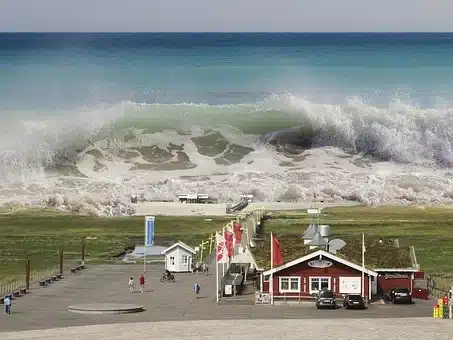
BC is an earthquake zone but it’s not the only one in Canada. Indeed, the most deadly recorded Canadian earthquake happened in Newfoundland.  The resulting tsunami killed 27 people in 1927.

Then there are the unrecorded earthquakes to consider.  One example is the last mega-thrust earthquake to hit BC in 1700. According to the oral histories of the First Peoples, the resulting wave and landslides wiped entire villages off the map. The quake also sunk forests up and down the west coast of North America. Even Quebec gets its fair share of quakes.  The province receives a 5-6 magnitude shake every 25 years or so.  In addition, they receive a 6+ magnitude shake about once a century.

What to Expect

So what, as business planners, should we expect when a major earthquake hits? For west-coasters, I highly recommend the CBC’s podcast Fault Lines to get a really in-depth picture. But, in general, we should expect:

  • Power outages – lasting days to weeks (even months, if you’re rural and there’s a lot of damage.)
  • An earthquake may result in pipes being damaged.  The damage may cause taps to run dry or continue flowing with unsafe water. This can last until a professional can be booked to fix things and they’ll be in high demand.
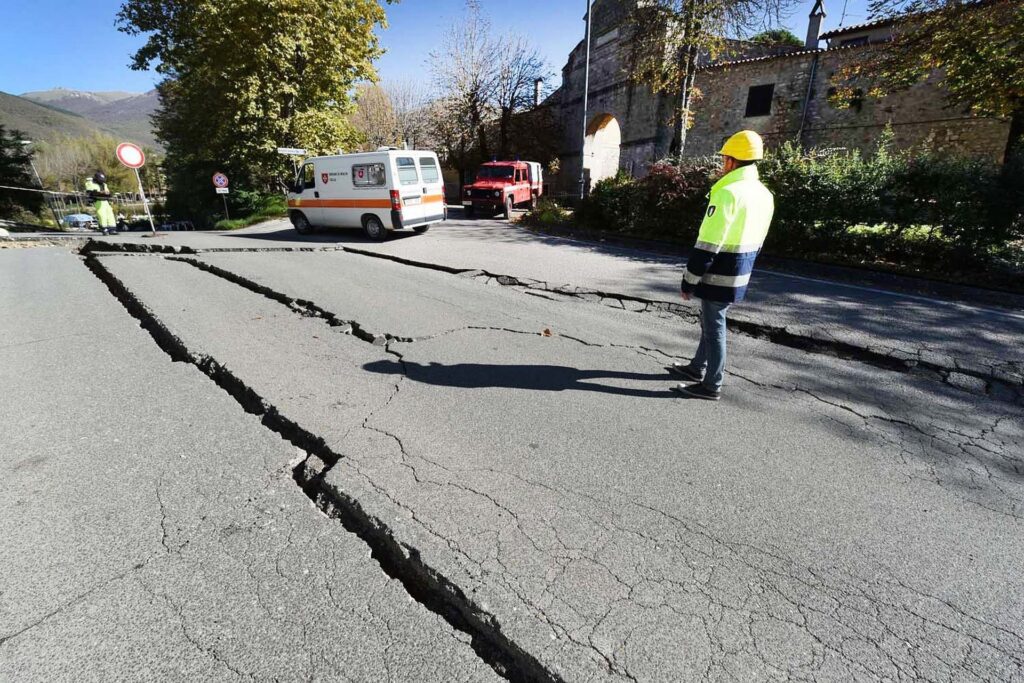
  • Roads will be damaged. In Christchurch’s 2011 earthquake, sinkholes large enough to swallow cars opened in roadways. Liquification made areas impassable. In other examples, bridges, overpasses, tunnels, and off-ramps become unsafe to use.
  • Roads will be clogged. People will be trying to get to their families. Emergency vehicles will be trying to get where they’re most needed. People will also be trying to evacuate (even if they don’t need to.)
  • Fires are a major danger after an earthquake. Gas leaks are common and people are lighting candles. Damaged water systems and roads make fighting them difficult.
  • Buildings may be unsound and shelter needed outdoors.
  • If your building is coastal, there may be a tsunami coming in. In that case, full evacuation might be necessary.
  • Depending on the nature of your business, the severity of the quake, and dumb luck, you may have injured staff.

Why Prepare the Workplace?

The Legal Aspect

You might have legal responsibility. Responsibility may depend on the nature of your organization. An example is the continued care and well-being of your staff and guests. Government mandates that care homes, for example, have supplies and a comprehensive emergency plan. The government does not require this mandate for all industries and tourism and general business are two such examples.  However, the government highly recommends that they have 72 hours of supplies on hand for staff and guests.

What If?

We get a lot of business customers who are skeptical about needing a full 3 day supply for their staff and guests. Often we hear people in this mindset leaning towards 24 hours or less.  Their reasoning is that everyone will go home. But what if they can’t get home due to road closures or injury? What if they don’t have supplies or family at home? You may find they simply feel safer staying at work. You may also have to consider that your customers are from out of town and have nowhere to go. Or staff that commute who need supplies to make the long hike home.

A Bigger Picture

All of your staff may be able to make it to where they need to go. In this instance, I encourage you to look at ‘extra’ supplies as an opportunity for good public relations. No, your staff might not need it.  However, imagine how grateful others would be for your organization’s generosity. In all honesty, the staff will probably need it. We cover the usefulness of emergency preparedness for business continuity at length here.

Think of emergency planning for your business this way. It’s an opportunity to ensure your assets (employees, facilities, and your building) are prepared to meet emergency conditions. These things are tied to your economic interests and ultimately factor into business continuity. Most businesses, especially small ones, won’t survive a disaster they aren’t prepared for.

Earthquake Planning is Everything Planning

As a rule of thumb, human beings have one set of basic needs: water, food, and shelter. More is ideal, but these things will keep us alive. When you ready yourself and those around you for an earthquake, you’re readying them for other emergencies too. There are some specialty items for each type of disaster such as sandbags for flooding and jumper-cables for the car. However, the essentials will always be the same.

By preparing for an earthquake, you’re most of the way to being prepared for everything else.  From solar flares to extreme weather, to the more exotic emergencies we hear about, you’ll be covered. Everyone gains in being prepared for any situation where regular access to everyday luxuries is cut off.

The Emergency Plan

Creating an emergency plan can be overwhelming. There’s a lot to assess, analyze, and solve in every area of the business. The document provided at the beginning of this article by EPICC and ICLR contains a really great checklist to break the job into manageable pieces.

Generally speaking, creating an emergency plan comes down to examining what risks your organization faces. Once that’s done, precautions then need to be put in place to mitigate them. Ideally, your plan will also include how your business will recover from emergency impacts.

A few examples of how the pieces fit together:

  1. Our office has a lot of heavy furniture. This could be a falling hazard. We will secure it to the wall so it cannot topple. No recovery action required.
  2. Our assembly line works with delicate, finely calibrated equipment. It could be a danger to workers in an earthquake and also become imprecise, damaging our ability to continue work. We will put emergency shut-off procedures and training in place to protect workers. In addition, we will create an agreement with the machine technician that they are to send a tech after an earthquake. Lastly, we’ll also put the technician’s contact information on the machine, instead of relying on digital copies.

The Emergency People

Creating an emergency management and/or business continuity team will be an important part of preparing your organization. These people create, maintain, and update the plan. They are in charge of coordinating the execution of the plan in an emergency. Have people from different areas of the business on the team. It’s a good idea to include different levels of the hierarchy as well. The more perspectives at the table, the more risks you’re likely to spot.

For small businesses, the owner is likely in charge of emergency planning. However, they should still consult with their team.  Consider what risks are around and what impact these risks could have.

No matter the size of your business, encourage your team to prepare at home too. Staff must feel that their family/home is taken care of in an emergency. If not, they won’t be coming back to work until things have settled.

Utilities

In previous articles, we’ve discussed general emergency planning for businesses at length. We have yet to go into detail on a few key areas. One of these areas is the business’s utilities. In an earthquake, there is a very good chance that the building’s utilities will have problems or fail entirely. As always, there are things you can do to minimize risk before an event occurs.

Natural Gas

Natural gas lines can be turned off if there is a suspicion of a leak. We recommend that a professional service person be consulted to turn it back on.* Staff must know when, and when not to, turn the gas off. All employees should also know where the shutoff valve is, and not to turn it back on without qualified help. Keep an adjustable wrench or 4-in-1 emergency tool with your emergency supplies to help with shutoff.

*Technically, there’s nothing stopping you from turning your own gas back on. However, a qualified person can check the system for leaks and ensure everything is in good working order. Nobody wants to see what happens if it’s not in good working order. Boom!

Critical Fixtures

Gas and water piping, electric conduits, and sewage lines can also be secured against excessive movement. This will help them survive an earthquake intact. Check if these crucial fixtures are also safe from falling objects.

Power Backup

Most businesses rely on power. Do you have a backup generator or other alternate power source? Depending on your area and the severity of an earthquake, power could be out for weeks after an event. Test any of these systems monthly and set up emergency lighting to aid with evacuation. You should ensure all of your breaker switches are clearly identified, labeling which rooms/outlets they go to.

Telecommunications

Credit: Fran Hogan on PublicDomain

If a quake is large it can damage cell towers and even hardy landlines. If either of these communication tools are still working for you, use them sparingly in the first few hours. This frees up space in the telecommunications network so that critical calls can get through. If possible, use social media, text, or email to communicate. But avoid unnecessary use of the internet if you have it.

Ensure your organization has an out of town contact they can use as an emergency communications hub. For large organizations, this is likely another branch or head office. For smaller businesses, it might be a family member or a vendor/client with whom you have a good relationship. Be sure your team leaders know who to contact and let your key clients know too.

Anticipate that there will be no telecommunications networks or limited access. Then have a plan for the dispersal of information. Think about how you’ll inform your team, your staff, and how they can get word to their families.

Fire Management

Fire management is an important piece of earthquake preparedness. Broken gas lines, non-functioning fire hydrants, and damaged emergency routes combine to make a perfect storm for fires on the loose. They are one of the biggest dangers after the shaking has stopped.

The Do’s
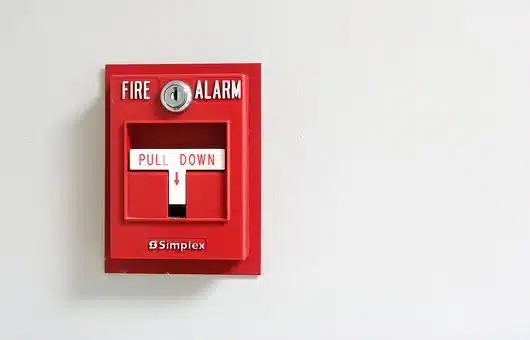
 

Ensure your workplace has working fire alarms and sprinkler systems. A staff member can be made responsible for performing periodic checks to confirm they are working correctly. All staff should know where to find the office (or building’s) fire extinguishers – these should be installed throughout the organization. Ensure all exits are equipped with battery-powered auxiliary lights.

Calling in the Pros

Specialists need to look for fire hazards in the workplace. An Inspector should conduct regular inspections. A member of the local fire department or a trained staff member can do the necessary inspections. Have your extinguishers regularly inspected as well. If possible, install a smoke control system inside the building – especially for larger facilities.

Summary

Earthquakes happen here. They’re not something that only happen to other people. They cause devastating economic loss and loss of life.  Many businesses unfortunate enough to be in their paths never recover. Set up strong plans to prepare, mitigate, respond, and recover. It’s also important to have the supplies and knowledge on-hand to support staff.

Thank you for reading.

This article was written by Zenia Platten – Author of Tethered and Emergency Preparedness Professional

Avalanche Dos and Don'ts

Avalanche Dos and Dont’s

We’ve all seen them in the movies – massive tsunamis of snow plummeting after the main protagonist, consuming all the slower, unnamed henchmen in its wake. But not all of us can ski like James Bond. If a regular person – a henchman even – is caught in an avalanche, what are we to do? 

Before 

If you don’t have access to avalanche forecasts, I have good news. Avalanche Canada has a special tool designed to rate the danger of your area. Based on recent weather and geography, they named it the Dangerator – easily the best name for a safety program I’ve ever seen. Use their video to learn how to spot potential avalanche dangers and avoid them. Avalanche Canada also provides courses and training for avalanche avoidance and survival. 

Pre-trip planning is often overlooked but it’s the simplest way to minimize your risks of a Bond-style snowtastrophe. Look into weather conditions expected before and during your planned trip.  Research your planned route and take note of avalanche forecasts.  Decide carefully on the companions you want to travel with and know their backcountry experience.  Be sure of the gear you’ll need and whether a self-guided or group expedition would best suit your needs.  

Last but not least, don’t forget to let people at home know your itinerary.  Should you not arrive back home on schedule, they can alert authorities immediately. 

During 

All major hikes begin at a trailhead, whether it’s marked or just the agreed ‘starting point’ for your journey. This is a good time to do one last check on gear, conditions and human factors. 

Gear

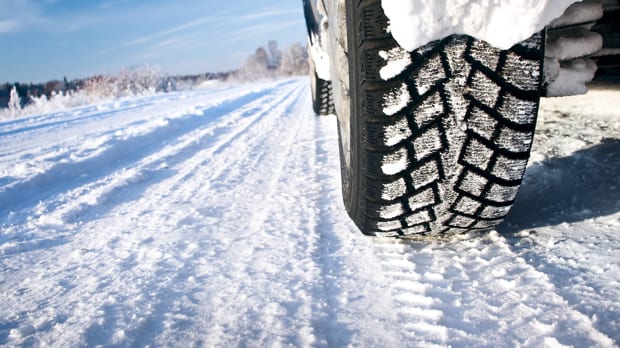
Winter tireBe sure that everyone has the individual gear they need.  Take care to ensure that the group is well equipped with any communal items. Everyone should know who is carrying which communal items in case they are needed in a hurry. The Association of Canadian Mountain Guides has a great gear checklist here. 

Conditions 

Double check that the weather and avalanche forecasts are consistent with what you’re seeing and that your information is recent. Think through how the weather will affect any avalanche risks. 

Human Factors 

Sometimes not everyone is ready for the same hike. Be sure the group understands what the risk factors of the trail are – they must be comfortable taking on these risks. If there is a broad range of experience in the group, it may be wise to implement a buddy system between veterans and newbies. Be sure that everyone takes safety seriously – the last thing anyone wants is to get into serious trouble because one goofball ignored protocol.  

 After 

Well. That didn’t work. Despite your best efforts, Dave just had to show you his new yodelling technique and a massive wall of snow is heading your way. Dang Dave.

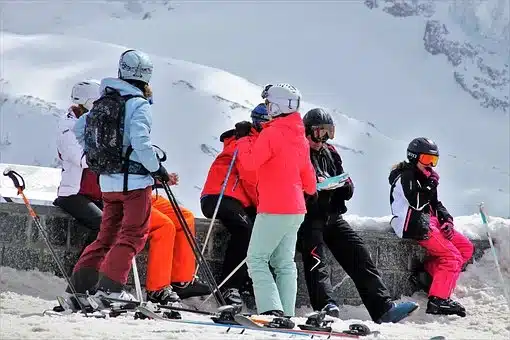
Do your best to keep out of the snow’s path. If that’s not possible and you are caught up in the snow, try either of the following: use swimming motions to stay near the top or grab a tree to avoid being swept away. As the snow slows down, cover your face with your arm or hands to create an air pocket. If things settle, and you don’t know which way is up (we’ve all been there) – spit, it will always fall downwards. There is gear that can help you stay afloat in snow or be visible to rescuers. Inflating jackets, avalanche cords and trackers are all great additions to your winter hiking kit. 

Hikers can’t wait for search and rescue when a member of their troupe is buried. They need to initiate a rescue immediately. There are courses that train in the proper procedures.  In addition, there are avalanche poles, collapsing shovels and tracking devices that can help.  However, for those of us who just want to read a simple internet article, there’s good old Wikihow on how to survive an avalanche 

Summary 

There is so much to learn about avalanches and safe conduct around them.  We’ve barely covered the tip of the iceberg! If you are going for a winter hike, and not just reading for curiosities sake, I highly recommend spending time on the above linked websites (okay, maybe don’t spend too long on Wikihow). They both have oodles of great information compiled by seasoned experts.

If you’re looking for a start to your hiking supplies, we offer a variety of first aid kits, perfect for any situation. Thanks for reading! 

This article was written by Zenia Platten – Author and emergency preparedness professional. 

Weird Winter Weather Phenomena

Weird Winter Weather Phenomena

Weird Winter Weather Phenomena

Living in Canada we expect some extreme winter weather. Okay … maybe not so much in Victoria BC, but we hear about it from our eastern cousins all the time – usually while we’re admiring the cherry blossoms! 😉  But did you know that the weather can cause some pretty crazy phenomena outside of the usual precipitation and sunshine? We knew, but we didn’t know know. You know? So today we’re going to talk about two of our favourite weird winter weather happenings: Frost Quakes and Thunder Snow.

Weird Winter Weather No. 1: Frost Quakes

Credit: Streiwa on PixaBay

Also known as ice quakes, or (if you’re feeling fancy) cryoseisms, frost quakes create many of the same signs as larger scale earthquakes. Booming sounds, cracks appearing in the ground, shaking and tremors can all accompany a frost quake.

In fact, the shaking has been known to register as a VI on the Modified Mercalli intensity scale.

Frost quakes affect a much smaller area than earthquakes and sometimes are preceded by Earthquake Lights. These events occur when water freezes in large areas of soil or in solid rock. When water freezes it expands (hopefully not damaging anyone’s pipes!) and builds tension in the ground. The strain can be released by melting, but if the environment cools rapidly, it can become too much for the rock/soil to handle. In these cases, it’s a cryoseism.

Frost quakes are most common in the eastern provinces but have been known to occur as far west as Calgary. The great lakes region and St Lawrence River corridor are especially prone to them thanks to their habit of rapidly changing temperatures.

Ideal conditions for a frost quake are:

  • The ground must be thoroughly saturated, usually from a heavy rain or meltwater.
  • Temperatures drop from above zero to sub-zero very quickly – usually within 16-48 hours.
  • There’s less than 6 inches of insulating snow cover.

Weird Winter Weather No. 2: Thunder Snow

Credit: Slavica on iStockPhoto

Thunder snow is a type of thunderstorm where, instead of rain falling with the lightening, you get snow. Big deal, right? RIGHT! Due to the weather conditions that are usually necessary to achieve the rarer thunder snow effect, it is usually accompanied by heavy snowfall (5 to 10 cm per hour) limiting visibility severely, even in light winds. But the winds are rarely light. Thunder snow goes hand-in-hand with storms and blizzards and frequently has winds with tropical storm force.

Once again, these effects are most common near the great lakes so, if you’re having a lakeside winter escape, beware of the extreme wind chills and frostbite that are common during thunder snow. Due to the low cloud cover and acoustic dampening effects of snow, thunder in this kind of storm can usually only be heard if you’re near it: 3-5 km away. There’s also a good chance that any lightening in these storms will have a positive polarity, often a sign that it will be more destructive than negatively charged weather. So, not only will it be difficult to hear coming, it will hit harder too. When these weird winter weather phenomena occur, it’s best to stay indoors …

Summary

Credit: James Vallee on DreamsTime.com

If you find yourself caught it any extreme weather, please stay indoors whenever possible. Should you be stranded on the roadside, check out our other posts here on how to best survive a blizzard from your car.

Thunderous bangs and shaking furniture can mean it’s time to drop, cover and hold on. However, if you’re in the eastern provinces, you could also be experiencing a weird winter weather frost quake. Once you’re confident it’s not a real earthquake and your loved ones are safe, check your pipes for damage. If it’s cold enough to crack rock, it’s cold enough to rupture a pipe.

Share this post with your great lakes friends and wish them a safe and happy winter from all of us here at Total Prepare! Thank you for reading!

This article was written by Zenia Platten – Author of Tethered and emergency preparedness professional


A COVID Update

A Total Prepare Update During Covid-19

A Total Prepare Update During Covid-19

We have been taking a break from blogs since February this year due to the covid-19 pandemic. Before we really get into the
swing of things again, here’s an update on how things are going at your favourite one-stop apocalypse shop.

As you can probably guess – we have been busy!  <img=”https://totalprepare.ca/wp-content/uploads/Simon.jpg”>Simon dressed a little like Ned FlandersAs an essential service Total Prepare has remained operating throughout this state of emergency providing PPE and sanitation supplies for individuals, organizations, and government across Canada. While product in these areas has been difficult to come by, our purchasing team has worked tirelessly to keep them in stock as often as possible. (And doing a fabulous job! Click here for current stock.)

Although our Victoria BC storefront was closed for a couple of months in April and May, our diligent
warehouse staff worked non-stop to get online and phone orders moving as quickly and safely as
possible. Our showroom is now open again at 48 Crease Ave (M-F 9:30-5) and our masked team
members are ready and waiting to assist walk-in customers.


We are pleased to advise that during the pandemic we were able to add several products to our line up.<img=”https://totalprepare.ca/wp-content/uploads/Maple-Brown-Sugar-Oatmeal.png”>
These include Readywise 7 day dry bag food packs, OMEALS self-heating entrees and breakfastsInfection Protection kits, masks, and more!  Throughout it all, we’ve been working hard to continue to offer competitive prices on products we believe in and use ourselves.

Perhaps the biggest change at Total Prepare in 2020 is that we have had the pleasure of adding several
team members to the business. New staff in purchasing, customer service and sales are allowing us to
keep ahead of the game and continue to offer the excellent service and products that our customers
know to expect from Total Prepare.

What’s Next?

Moving forward, we will continue to work with all our clients to ensure they get their orders in a
timely fashion and have the supplies they need for any emergency – pandemic, earthquake, hurricane,
or in-laws (you never know when you might need to evacuate!)

It is our hope that this state of emergency will help to bring preparedness to the forefront.  We encourage
individuals, organizations and government to understand their local hazards, make a plan, and get their
preparedness supplies in shape. An emergency can come in any shape and at any time – a little
preparedness can go a long way to making them more manageable and adds to a smooth recovery.

At Total Prepare we will be resuming our usual communications.  These channels include blogs, sales, and email
newsletters as day-to-day business begins to find a new rhythm. We continue to grow our team and are
tweaking internal structures and processes to make sure every customer gets the best experience
possible.

We continue to follow the provincial guidelines and best practices for operating during the
pandemic to keep our staff and customers safe. During this state of emergency, we ask our clients to
work with us to ensure masks and social distancing are in place during in-store visits.

A Thank You

Finally, and most importantly, we would like to take a moment to say thanks: to our customers, suppliers,

and – of course, our steadfast team – for all of the support, patience and resilience they have shown over
these unprecedented months. Everyone has been amazing!

The understanding of our customers around product delays and courier struggles has been sincerely
appreciated by management and service staff alike. Our manufacturers, suppliers and couriers have
been champions: working overtime, pulling extra staff, and doing everything in their power to meet
skyrocketing demand. Last, but not least, our team has been here day-in and day-out answering
hundreds (feels like thousands!) of customer inquiries with professionalism and grace.

From the bottom of our hearts – we thank you all for your support and understanding.

Resources

If you are looking for more information on Covid-19, or guidelines on how to best protect yourself and
others, here are some resources we recommend:
Total Prepare’s original article on the virus
BC Center for Disease Control
Public Health Ontario
World Health Organization

This article was written by Zenia Platten – Author of Tethered and emergency preparedness professional.

Garage Door

Where to Store Your Emergency Kit

Whether your shiny new emergency kit was just delivered, or you’re admiring your completed DIY kit, there’s one question that you’ll be faced with next: Where do I store my emergency kit?

We get this question a few times a week – and it’s a great question! If the unexpected happens, where will be accessible? Where will everything stay secure, dry, and vermin-free? We have the answers!

Kit on Wheels

Cartoon RVThe absolute best place to keep an emergency kit is in itself an emergency kit. Confused? I’m talking about RVs! If you have a smaller home parked in your driveway, it can double as a really strong emergency kit. Why camp when you can glamp, after all?

Storing emergency supplies inside an RV protects them from the elements, keeps them secure, and minimizes what pests can reach them. It offers some insulation from shifting temperatures and will still be standing and be safe to enter after most major events.

If an RV is not an option (#same) consider any other vehicles you have. Should a vehicle have enough space, keeping your kit there means it will be with you on the move, and it will be protected from falling objects. However, if you park your car underground regularly, one of the below options might be a better choice.

Vehicles of all sorts make great options for storing emergency kits, but if you choose this route be sure to hide a spare car key somewhere outdoors. Magnetic key boxes that attach to the bottom of your vehicle are discreet and affordable. They’re also perfect for those times when you get locked out of the car.

Near an Exit

Credit: Luis Yanez on Pexels

If you don’t have a vehicle or if your vehicle is too small to keep a week of supplies (go small cars!) your next best choice is to store your kit by your home’s main exit. This is best if your supplies include temperature-sensitive items like MREs or freeze-dried food, or if you live in an apartment. If you’re relying on good old ration bars, outdoors (below) might be better.

Think through your emergency plan and what routes from your home you are most likely to take. Storing your emergency kit along this course will make it easy to grab and go during an evacuation. Hall closets are popular choices, but be sure not to bury the supplies under the day-to-day detritus. It needs to be accessible at all times.

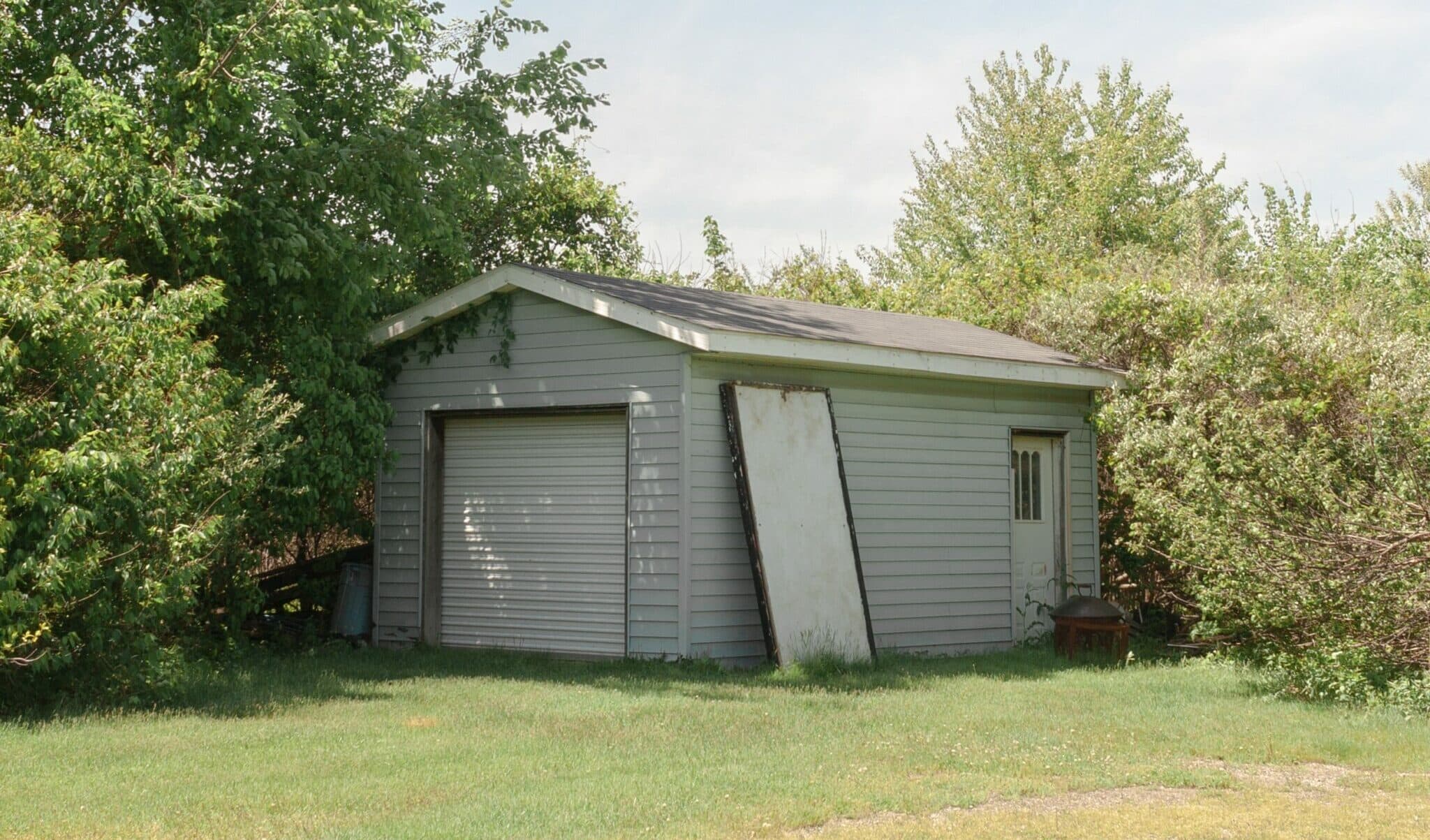
I like to recommend storing supplies at the front of a garage if that is an option. It’s usually not central, and the metal doors will be easier to get through if the house is damaged than solid walls or heavier debris. Garage storage also allows for quick and easy car-loading if an evacuation calls for you to hit the road.

Outdoors

Garden shed

Photo by Tanner Vote on Pexels

This option is great for anyone with a yard or garden. Get a secure, airtight, heavy-duty storage box and keep your kit out back.  We highly recommend truck totes/boxes for this job, as they tend to be large and lockable.

Temperature-sensitive food can make things awkward with outdoor storage unless you have a cool shed or root cellar, so keep shortened shelf lives in mind while making storage plans. Don’t listen to anyone who calls it a bunker – they’ll be the ones at your door if something does happen.

If you’re a DIY god/goddess and have the time and energy, turning an old fridge on its side and burying it keeps supplies discreet, cool, and secure from pretty much anything. They also make amazing time capsules, if you’re into that.

Last Resort

It’s time to talk basements.

You don’t own a large vehicle, your house doesn’t have much outdoor space, no garage, and the hall closets are all stuffed to bursting with your precious collection of mid-century antiques that will definitely be worth a fortune one day. What’s a person to do?

Credit: Leticia Ribeiro on Pexels

Basements, attics, and crawl spaces are all great storage solutions for our holiday decorations and old sports gear, but they’re not ideal for storing disaster supplies. They can be awkward to get into at the best of times, are often the first victims in floods, and are at the bottom of the heap if your house becomes structurally unsound.

But they’re still better than nothing! A person with supplies in the basement is still 100% better off than a person with no supplies. It may be tricky to get to them after some disasters, but at least you have something to get to, rather than relying on external forces that are probably overwhelmed.

However, before you make the decision to store your supplies underground, touch base with your neighbours and see if they have somewhere outdoors that they’d be willing to share. Heck, maybe you could even pool resources and have a stronger kit together than either party could have on their own.

Summary

RVs are the best emergency kits you can have, but there are other great places to store supplies as well. In vehicles, hall closets, on exit routes, or outdoors all work well. If you’re in a pinch, ask a neighbour if they have some spare storage space, or use a basement or crawl space. Want to learn more about building emergency kits? We’ve written more about that here.

Thank you for reading – share with us in the comments where you keep your kit! (Mine is behind a bar by my front door.)

This article was written by Zenia Platten – Author of Tethered and Emergency Preparedness Professional.

a model of the 2019 novel coronavirus

The 2019 Novel Coronavirus

There’s a new virus on the block and its name is corona. (Not for the beer – under a microscope it looks like a solar corona/crown.) Most likely, this new coronavirus originated in animals at a wildlife and seafood market in Wuhan China before transferring to human hosts in January of 2020. The timing of infection was unfortunate, as the lunar new year was beginning and many people were traveling to visit family.

a model of the 2019 novel coronavirus

An illustration showing the ultrastructural morphology exhibited by coronaviruses. Image courtesy of: Alissa Eckert, MS, Dan Higgins, MAM

At Total Prepare we offer our prayers for those fighting the viruses, and our condolences to the families of those who have lost that fight. For those of us lucky enough to be healthy, here are some tips to stay that way:

Symptoms

Early intervention and avoidance is much easier if you know what to avoid. The Ontario government has a great page with lots of great information on this topic. Symptoms of the new coronavirus are reminiscent of the flu and include:

  • Fever
  • Cough
  • Difficulty breathing
  • Pneumonia
  • Kidney Failure
  • Death (severe cases)

How to Stay Safe

At present, it is believed that virus is primarily spread through ‘droplet transmission’ – large “respiratory secretion droplets” – or as I like to call it, lung gunk. Basically, it’s spread through sneezing and coughing so cover your mouth! Risk of severe illness is increased for the elderly, or anyone with weakened immune function/pre-existing chronic diseases.

an elctron microscope transmission showing coronaviruses

An electron microscope transmission showing the distinctive crown, or sun-like appearance that gives coronaviruses their name.
Image courtesy of: CDC/ Dr. Fred Murphy; Sylvia Whitfield

Different types of coronavirus can cause everything from the common cold to SARS, but the rules to minimize your risk are the same for all types:

  • Wash your hands often
  • Don’t make prolonged contact with sick people
  • Cough and sneeze into your elbow – not into your hand or onto your neighbour
  • Disinfect surfaces
  • Avoid high risk areas like farms, animal markets, and abattoirs.
  • Avoid animals where possible – alive or dead. (Indoor pets are probably fine.)
  • Avoid surfaces with animal droppings on them.

Whoops, too late

Despite our best efforts we’ve (hypothetically) fallen ill. What now? Unfortunately there are no specific treatments or vaccines for the new coronavirus. If your symptoms feel worse than a normal cold, consult your doctor – they can prescribe things to suppress pain and fever. In the meantime, as with any kind of coronavirus, drink plenty of water and rest as much as you can. Chicken soup is always good too.

If you believe you might have the new coronavirus, don’t panic. Simply avoid close contact with others, alert medical professionals and follow their direction.

Flying High

Thanks to the packed in, poorly ventilated nature of modern air travel, there is an increased risk for those traveling during this time. If you feel sick after/during travel, and the symptoms match the virus, alert a flight crew member and/or medical professional. They will provide guidance and decide if you need further medical assessment. If seeing a doctor, tell them what countries you visited and if you had any medical treatment while there.

The Other Type of Viral Spread

As everyone knows by now, our motto here at Total Prepare is to ‘be prepared, not scared.’ This is true for the current situation too. We’re seeing a lot of scary claims on social media about the virus, and it’s spread, but the good news is, many of the stories are untrue. Be sure to check the sources of everything you read to ensure that you are not being misinformed. If something seems especially scandalous or dramatic (people collapsing in the street for example) take extra precautions to make sure it is real before sharing the story. Viral news symptoms include panic, rumours, and feelings of unease.

Summary

With the 2019 novel coronavirus (or 2019-nCoV as it’s also known) on the rise, it’s easy to worry. Step back, take a deep breath, and take the same precautions you would for the common cold (they’re from the same family after all.) Wash hands, cough into your sleeve or a tissue, disinfect surfaces, and avoid contact with sick people where possible.

Stay safe out there! Thank you for reading.

This article was written by Zenia Platten – Author and Emergency Preparedness Professional.


A variety of fire extinguishers

House Fire Prevention, Safety, and Recovery

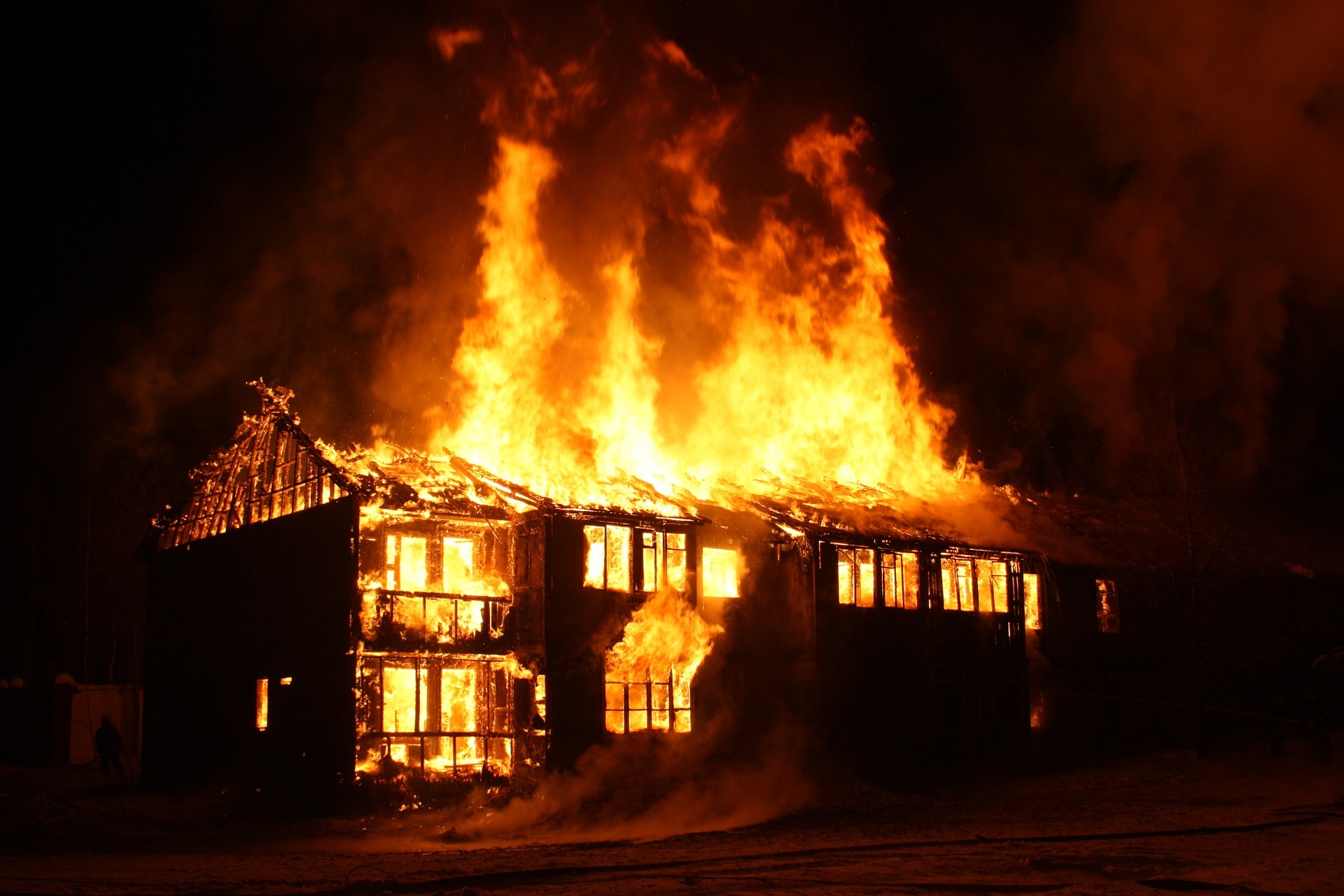
Fire safety, prevention, and recovery is such an important topic. House fires are what I call the ‘everyday disaster.’ According to SGI Canada: “There are about 24,000 house fires each year in Canada, resulting in an average of 377 deaths and 3,048 injuries.” That’s more than 65 fires a day.

House fire at night

Credit: Kolyaeg on Pixabay

If you’ve ever been to one of our workshops or webinars then you have probably heard me talk about my friend Neil. Neil grew up in California, which is a very flammable state. His family experienced a house fire in the middle of the night that flattened their home. Luckily no one was hurt, but they were suddenly left with nothing but the PJs they were wearing.

The first time he shared this story with me, I asked him if he could have brought one thing with him from the house, what would it have been. The answer surprised me. It wasn’t family photos, or the creative project he’d been working on for years, it was “cash, or maybe my I.D.” The family was insured, but to claim insurance one must be able to prove who they are. To rent housing, to drive, to renew bank cards, to cash a paycheque, you need identification for all of them. This is difficult if all your documentation has just gone up in flames!

So, today we’re going to be inspired by Neil’s story and learn all about house fires. We’ll discuss what we can do before a fire to make sure one never happens, how to best survive one you’re caught in, and best practices for recovering.

Fire Prevention/Fire Safety

Smoke Alarms

I know, I know, no one likes smoke alarms. They don’t know the difference between burnt toast and a genuine threat but having a working fire alarm installed increases your odds of surviving a house fire by 2-3 times. Check on your alarm each year, ideally when you’re updating your emergency kit, and ensure the batteries are still working. If you take the batteries out while you cook, be sure to pop them in again once the meal is ready and keep a close eye on the stove in the meantime.

Fire Extinguishers – (2022 Update below!)

It’s incredible how many people think that a fire extinguisher is the answer to any house fire. Just point and shoot and poof! No more fire… right? Nope! There’s actually way more to these lifesaving tools than most folk realize.

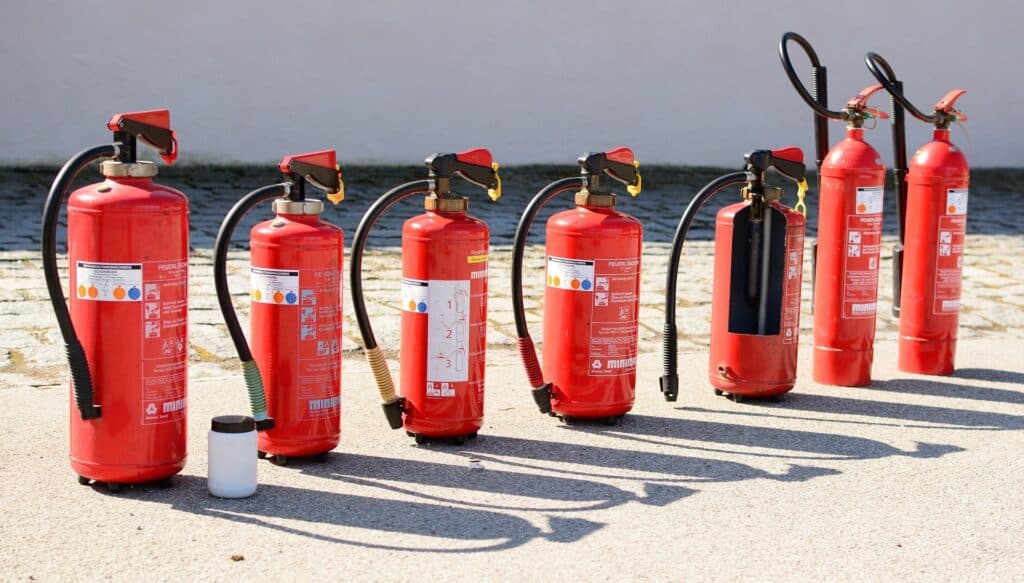
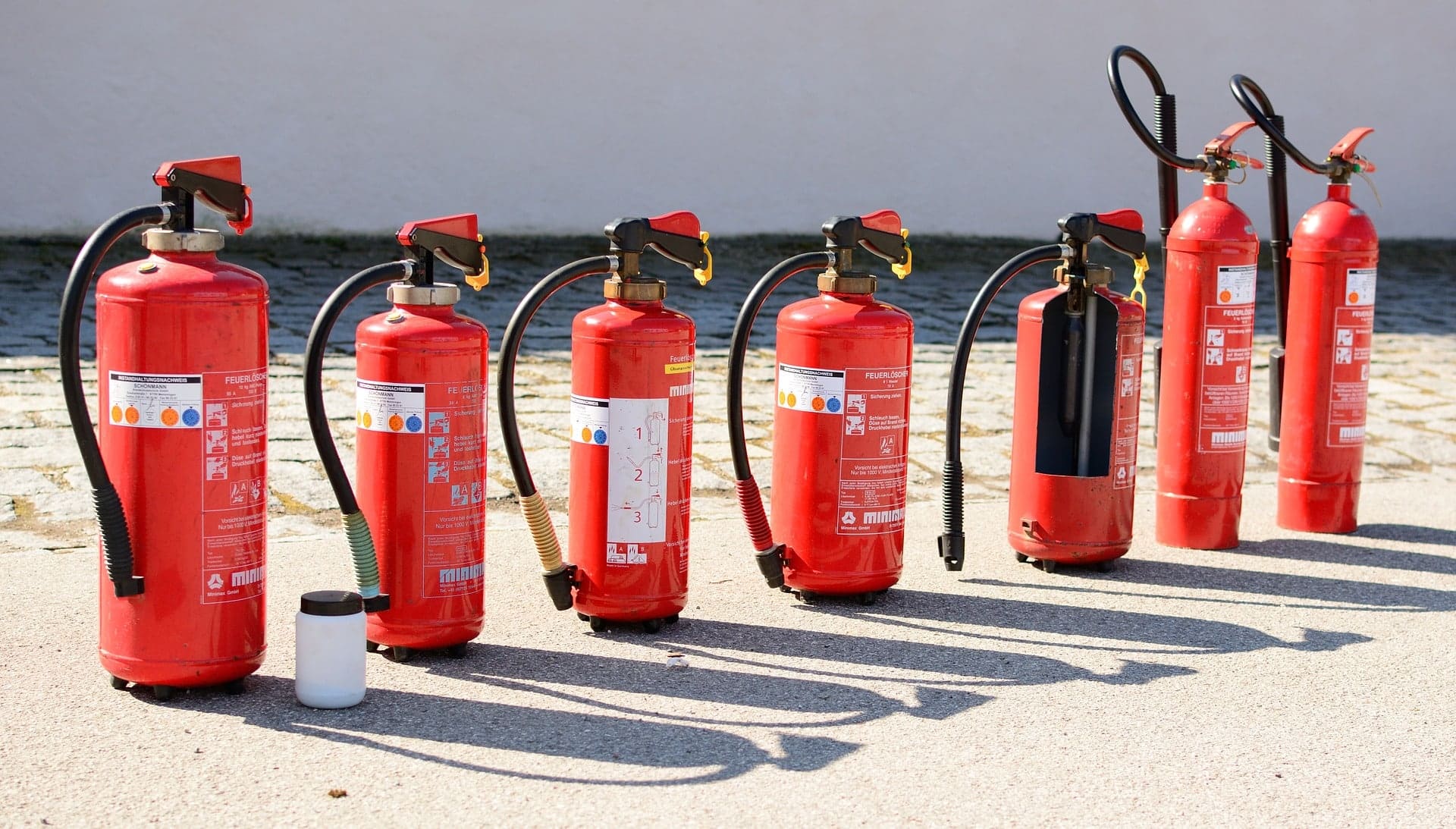
A variety of fire extinguishers

For starters, there are 5 different classes of extinguisher. Only 4 of them are relevant for home use:

  • Class A – designed to put out normal combustibles like paper, wood, or cloth.
  • Class B – best for fires involving flammable liquids, gasses, and oil based paints.
  • Class C – perfect for fires involving electronics, appliances, and power tools. Anything that’s electrically energized and/or plugged in.
  • Class K – best for grease and cooking oil fires

Different types of extinguishers use different extinguishing agents. Using the wrong kind can be ineffective for safely putting out a fire. Using the wrong kind of extinguisher on a grease fire can even make the situation worse. Different types of extinguishers will have symbols to represent what they put out, so be sure to learn the symbols before you need them.

The other thing many people get wrong is when an extinguisher can be used. They picture themselves wading into a blaze, foam spraying in a protective and instantly effective cone as they search for their pet or car keys. As you have guessed, this is not how it works.

If the fire is still confined to one object (a pan or a wastebasket for example) then a fire extinguisher will probably be adequate. If it has grown any larger then that, or if your instincts tell you to get out, follow these steps:

  • Alert others to the fire
  • Evacuate the building
  • Go to your pre-planned meeting place
  • Call the fire department (use a neighbour’s phone if necessary)

Fire extinguishers last for about 10 years and should be serviced annually.

*2022 Fire Extinguisher Update!*

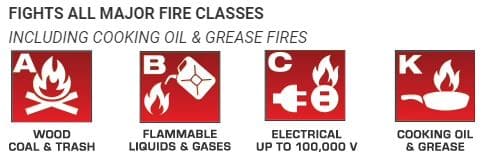
There’s a new fire extinguisher in town! The Element E50 Fire Extinguisher is now at Total Prepare and it just may be the best fire extinguisher EVER. It can extinguish type A, B, C, and K fires – ALL with one extinguisher! That means you don’t have to worry about having the right tool for the job.

Element E50 Fire Extinguisher types of fires small

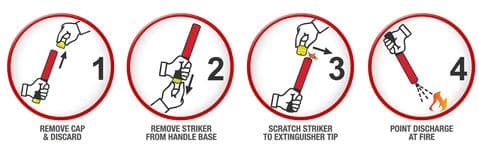
PLUS it never needs to be serviced and lasts until it’s used. It’s always ready when you need it! The Element Fire Extinguisher features a diagram showing it’s simple 4-step instructions, making it easy to use.

Element E50 Fire Extinguisher how to use

It’s smaller and lighter than standard extinguishers. It fits in a glove compartment, desk drawer, or tool box without issue. Since the Element E50 Fire Extinguisher has no compressed gasses, it won’t ever explode and can be stored in hot or cold temperatures.

We’ll write a full blog post on this phenomenal extinguisher shortly, but for now, here’s a quick summary of why every Canadian household needs an Element Fire Extinguisher:Element E50 Fire Extinguisher spinning

  • Doesn’t expire
  • Doesn’t need servicing
  • No mess
  • Can be stored just about anywhere
  • Compact
  • Lightweight
  • Extinguishes class A, B, C, and K fires
  • Non-toxic (safe around kids and pets!)
  • Easy to use
  • Discharge lasts 4x traditional options

—-Update complete—

Escape Routes

Always plan at least two ways out of any room. Don’t paint or nail windows shut, and don’t block doors or windows with furniture. If you cover your windows in insulating plastic for the winter, ensure that every member of your family knows how to remove it to make a speedy exit. Beware of seasonal blockades like Christmas trees – even though they’re festive they’re not worth blocking an exit.

Fire Safety: Fire in the Home

If you like a candle lit dinner, bath, or power outage, use a fireplace, or fancy yourself the next ‘top chef’ there are things you can do to mitigate the risks your flames cause. These tips are also relevant for electric space heaters and baseboard heaters.

  • Store fire-making tools away from children
  • Ensure any kids understand the dangers of playing with fire

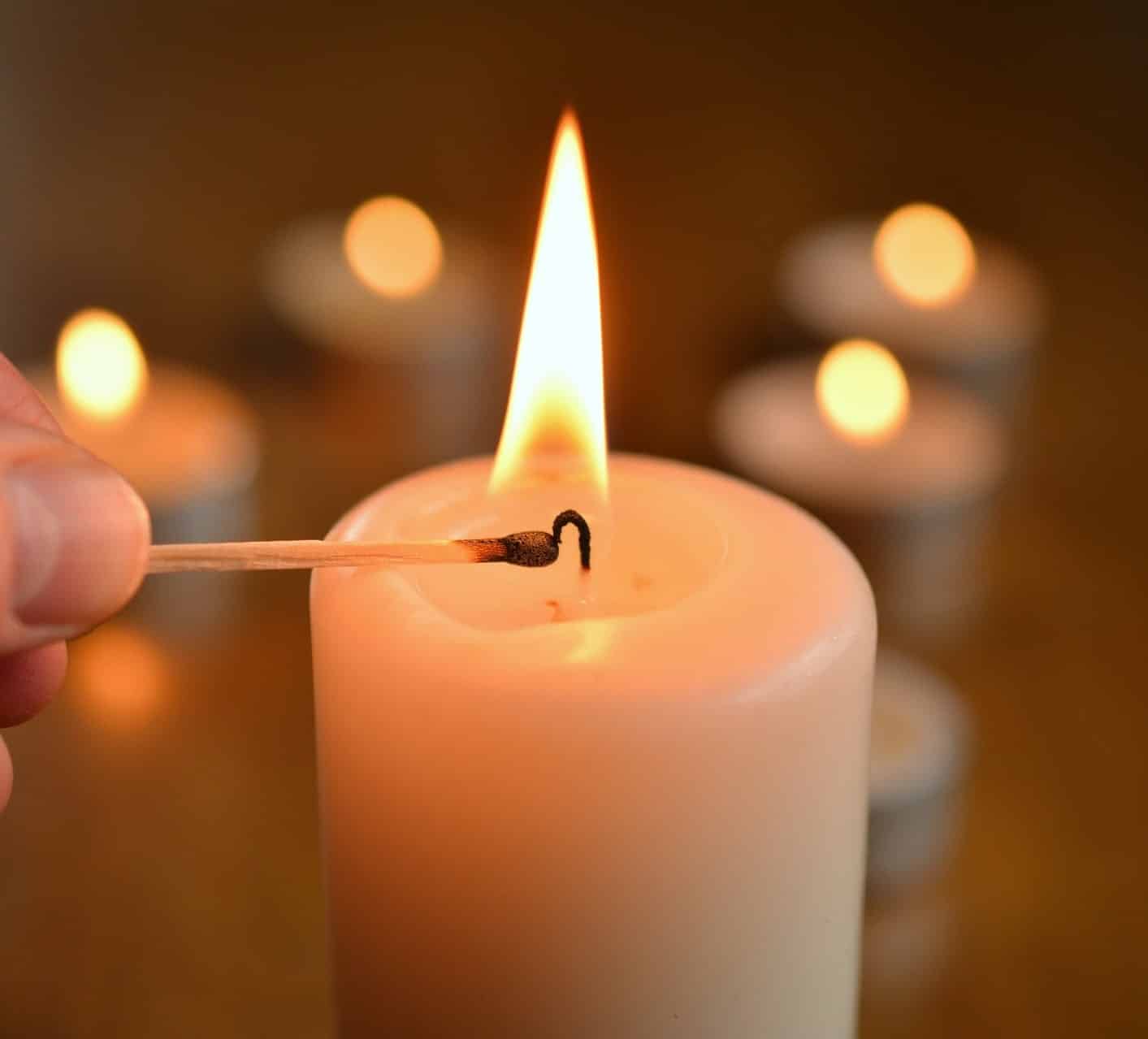
    a candle being lit by a match

    Credit: CongerDesign on Pixabay

  • Keep anything hot on heat-resistant surfaces
  • Ensure that anything with a lit flame is sturdy and not in danger of tipping
  • Don’t put open flames or hot appliances near curtains or other hanging fabrics (Hair included. The smell alone is worth avoiding it.)
  • Keep at least 1 meter of space between an open flame and anything above it (ie shelving)
  • If you have pets, beware of wagging tails near flames.
  • Never leave hot appliances/open flames unattended
  • While cooking, keep pot handles turned toward the rear of the stove. This way it’s more difficult to accidently knock them, or for children to grab and tip the contents.
  • Keep your stove and oven clean to avoid grease build up
  • Don’t pour water on a grease fire. Smother it with a lid or larger pot. *Or use an Element E50 Fire Extinguisher!
  • Know the limits of different cooking oils and their ignition points

Basically, have a healthy respect for fire and flammable objects.

Make a Fire Escape Plan and PRACTICE!

emergency exit sign

Every moment counts in a fire, so it’s important to have a plan in place and to know it like the back of your hand. Practice your plan with your household at least once a year, preferably twice a year if you can wrangle everyone. Make sure to practice at different times each year so you’re used to escaping in different weather/temperature conditions.

Ensure that there are two exits from every room, and that everyone knows them both and are able to access them (small kids might have trouble reaching a higher window, larger persons may have difficulty with a smaller one.) Make sure that all windows can open easily, and screens are not difficult to remove. If you use security bars, test those for ease of opening too.

Teach children not to hide from fire fighters, and to make themselves visible if they are stuck in a room. To make it fun, practice escaping from the house with your eyes closed to simulate dark smoke. Practice acting out the tips in the following ‘during a fire’ section too.

During a Fire

Smoke kills more people than flames do. It’s blinding, toxic, and insulates the heat bringing room temperatures even higher. Asphyxiation (suffocating) is the #1 cause of death in house fires, three times more common than dying from burns.

There is, however, a literal ‘up-side’ to smoke. It rises, leaving cleaner, cooler air beneath. If you find yourself navigating a smoky building, crawl as low as you can to get under the smoke. Breathe through a wet cloth if possible. It will help filter the air.

When escaping a flaming building, test every doorknob using the back of your hand before opening it. The skin on the back of the hand is more sensitive than your palm and the knob of the door will conduct heat from any fire from the other side. Don’t open the door if the knob is hot. Find another exit or use fabric/tape to create a seal around the door, minimizing smoke into your room.

If you’re trapped, do your best to make yourself visible. Wave towels or other fabrics from the window to attract attention. If you are in a windowless room, resist the instinct to hide – firefighters need to be able to find you. If one is available, turn a radio or speaker on high to act as a beacon for rescuers. It will keep playing even if you lose your voice to smoke or fall unconscious.

If you can’t reach someone who is trapped, leave the building and call 911. Let the emergency operator know where the person is and never run back into the flames for anyone or anything. Firefighters do not need a second person to rescue. One is already too many.

Emergency Kits

When an escape route takes you past an emergency kit, use your best judgement on whether to pause and grab it. Only do so if it is designed for grab-and-go (a backpack or duffel) – don’t try to struggle with a giant tote or unwieldy suitcase when you could be running. Assuming your neighbours aren’t jerks, you probably won’t need the food, water, and survival supplies in your kit. But as Neil taught us at the beginning of this post, having copies of your important documents can be priceless. Plus, it never hurts to have a bonus pair of your own underwear handy.

An alternative to the emergency kit is keeping a fire-proof safe in the home with important copies. Just remember: the safe is fireproof, but the inside will still reach insanely high temperatures. USB sticks and other plastics may melt.

Catching on Fire

A rogue sleeve over a stove top, a loose lock of hair over a candle, or pushing your way through the wall of a blazing inferno (not recommended) may all leave you a little scorched. While some hobbyists or professionals may find themselves readily surrounded by enough water to put out any fire, the rest of us might not have the same resources.

Aquariums and water pails aside, the best thing you can do for someone (including yourself) that has caught fire is to smother the flames. Use a coat, towel, blanket, or fire-blanket to throw over the flames and apply pressure to snuff the fire out. If the fire is too big or awkward to put out, or if you are alone and on fire, stop, drop, and roll to put out the flames.

*OR use the non-toxic Element E50 Fire Extinguisher! Mess free!*

Fire Recovery

Let’s say something has been damaged in a fire. Whether it’s an appliance or your entire home, there are some steps to recovering your normalcy as quickly and smoothly as possible.

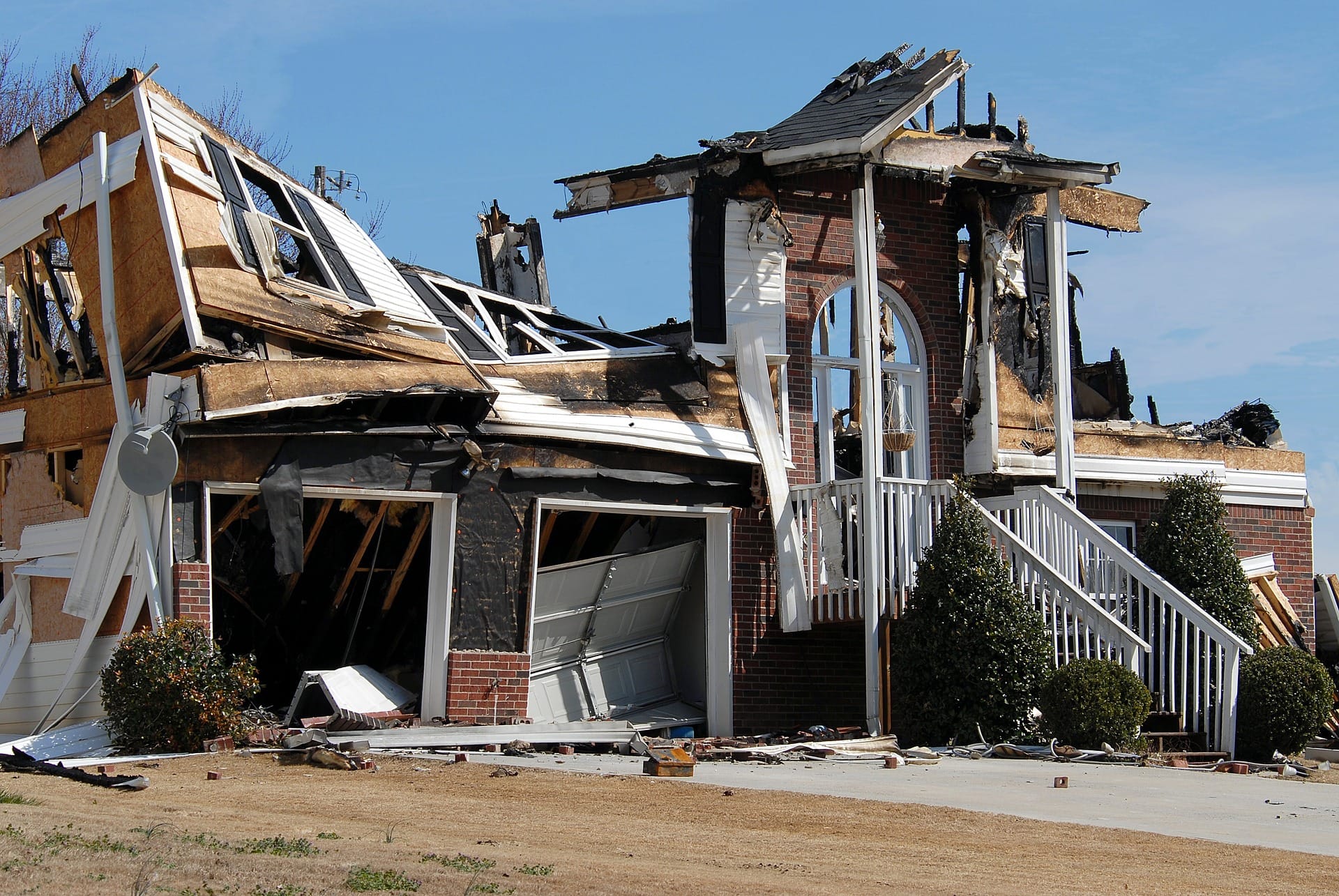
A Heavily Damaged House

Credit: Paul Brennan on Pixabay

Was the item/home insured? If so, catalogue the damages as soon as you can once it’s safe to re-enter the home. Take photos and make detailed notes as to what was damaged, it’s approximate value, and how bad the damage is. Take these to your insurance broker and they will be able to give further instructions. They will likely ask for receipts for each damaged item, along with the make, model, and date they were purchased. If the receipts were lost in the fire, request copies of your old bank statements to sleuth out the answers.

If the house is damaged, call your insurance company first-thing. Contractors and other businesses may begin soliciting you to put the damage right, and it can be overwhelming and confusing. Talk to your adjuster before committing to anything. They will likely have suggestions of reputable businesses in the area that are good at cleaning up soot and water damage.

Is the home unsafe to return to? Then you’ll need to find alternate shelter. Hopefully you have a support network of friends and family that can help you here, but if not, you may find yourself living out of a hotel for a while. Many home insurance policies cover loss-of-use, so some or all of this expense may be covered.

Talk to People

A house fire is a traumatic event. Even smaller ones can put us on edge and make us question our safety. Talk to people you trust or professional therapists to air out these feelings. All trauma is serious, and you are worthy of self-care.

Summary

Fire safety goes well beyond stop, drop, and roll. Making plans, installing safety equipment, and keeping important documents backed up are all steps you can take before the first spark to minimize the damage of a fire.

There is approximately a 1 in 500 chance that a Canadian household will experience a fire in any given year. Let’s work together to decrease those odds! Stay safe and don’t play with fire!

Thank you for reading.

This article was written by Zenia Platten – Author of Tethered and Emergency Preparedness Professional.

The Big One – are You ready for a megathrust earthquake?

In the media, we hear a lot about “The Big One” or the Megathrust Earthquake that BC is due to experience. There is a 1 in 4 chance that we’ll experience a major earthquake in the next 50 years, and a 1 in 10 chance that it will be a megathrust (usually a magnitude 9+). If that were a lottery, most people would play the odds.

All this talk of megathrust earthquakes got the Total Prepare team thinking: What happened last time?

Last time?

Yes! That’s right. BC is the most seismically active place in Canada and due to the locked fault line we’re sitting on we experience a major earthquake every 500-600 years on average. The frequency is irregular, some occurring 200 years apart, others biding their time for 800 years, but they are inevitable.

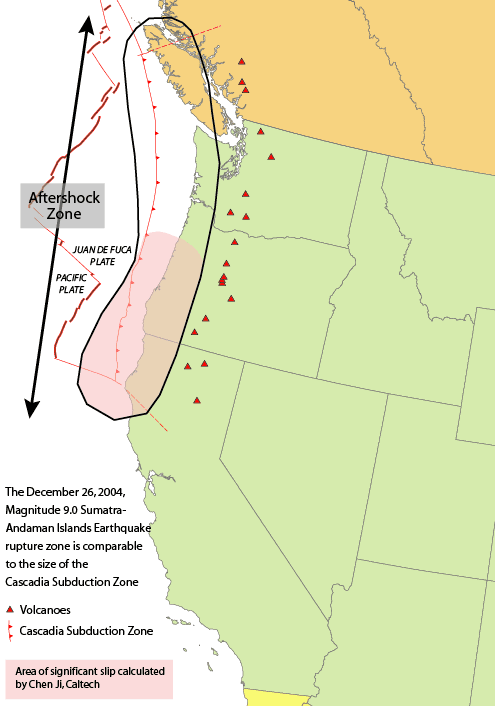
The last megathrust earthquake to hit our Cascadia Subduction Zone happened 300 years ago in 1700. It was one of the largest in earth’s history, clocking in at magnitude 9. Thanks to the oral histories of the local First Nations Peoples, and to precise records kept in Japan of the resulting tsunami, we know that it occurred on January 26, at approximately 9pm.

map showing the range of the last megathrust earthquake in the cascadia regionThe Damage

It’s a cold winter evening in your village. Families are retiring to bed, saying their goodnights and herding sleepy children indoors. There’s a BANG, like a tree falling just out of sight. The rumbling begins.

As the vibrations grow, traveling from your feet, to your ankles, and continuing up your body, you realize that it is not the sound that’s causing this, but the earth itself. Before you can fully process what is happening you’re thrown from your feet as the ground beneath you begins to sway. Around you, houses collapse. The long, regular waves keep you on your stomach for minutes – so long that you begin to feel sick. When it’s finally over, the ground is unreliable, opening in sinkholes or flooding with liquification. In a nearby coastal village a strange wave is spotted…

Oral histories tell us that the Cowichan peoples had buildings collapse in the last megathrust earthquake, and that a winter village of the Pachena Bay people was completely destroyed by tsunami with no record of survivors. Landslides were caused all over the effected area, and swaths of forest were buried, sunken, or destroyed.

Looking Forward

If you live in western BC I cannot recommend the podcast Faultlines enough. Produced by the CBC and with input from seismologists, engineers, and emergency management personnel, it is one of the absolute best sources available for learning about our seismic future. In it, Johanna Wagstaffe (a Vancouver seismologist) leads us through two scenarios that are both very likely in our area.

On top of examining what our earthquakes might look like, the podcast examines what our communities will look like. When can we expect help? Will our homes be standing? How long until the grocery stores are empty? Questions we get every day at Total Prepare.

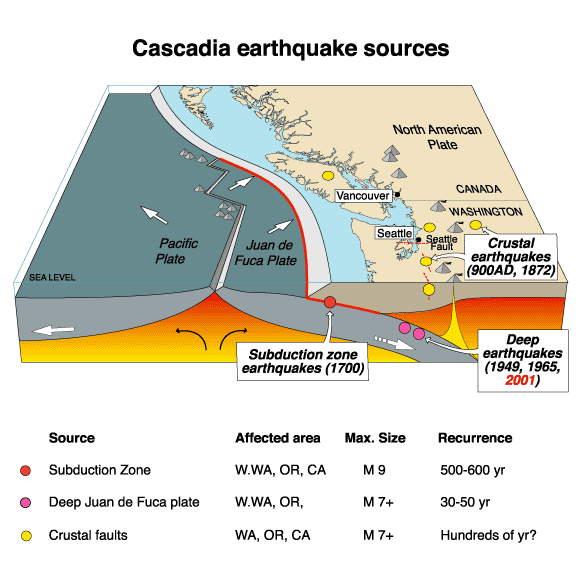
diagram showing sources of earthquakes in the cascadia region

Image courtesy of the U.S. Geological Survey

Getting Ready

If you’re new to BC, or to the idea of our earthquake zone, you’ve come to the right place! We have dozens of helpful education articles, just like this one. Prepared BC is another great place to go for help. The most important things to remember are to:

Know the Risks

Do your research and find out how your area is vulnerable. Are you in a tsunami zone? Is your house built to stand up to earthquakes, or has it been retrofitted to resist them? Do you know where your water and gas shutoffs are?

Make a Plan

Evacuation and Reunification planning is important, especially if you have family or friends in the area. Get an out of town contact and make sure everyone who needs it has their number. Plan multiple routes home from your work/school, and have a backup place to go in case your home is unsafe.

Get a Kit

There are dozens of guides out there for building your own emergency kit, or Total Prepare offers complete, professionally compiled options. Whichever way you choose to go, plan to be self-sufficient for at least a week.

Thank you for reading. This article was written by Zenia Platten – Author of Tethered and Emergency Preparedness Professional.

a wheat plant behind a no symbol

Celiac Disease & Emergency Preparedness

sign saying gluten free“Do those have gluten?” Is a question we get asked often here at Total Prepare. For some, avoiding gluten is a dietary choice, made on the advice of books or gurus. For people with Celiac disease, eating even a trace amount of certain wheat proteins (gluten) can mean hours of discomfort grappling with constipation, diarrhea, abdominal pain, or a whole host of other issues.

There are many symptoms (over 200!) associated with celiac disease that many people don’t realize they have it. The symptoms are broad and vary in severity depending on the case. If you eat gluten as someone with celiac disease, you may experience one, or a combination of the following:

  • Diarrhea
  • Vomiting
  • Constipation
  • Anemia
  • Fatigue
  • Bone or joint pain
  • Arthritis
  • Osteoporosis (bone loss)
  • Liver disorders
  • Depression or anxiety
  • A ‘pins and needles’ sensation in the hands and feet
  • Seizures
  • Migraines
  • Missed menstrual periods
  • Itchy skin rash
  • The list goes on!

To further confuse things, the disease can appear in children or adults without warning or explanation, and even without symptoms (positive blood test or intestinal biopsy.)

What is Gluten?

What is this mysterious substance that can take any form and bring any one of us low without warning? Unfortunately it’s wheat. Or at least a family of proteins commonly found in wheat, rye, and barley. Why do I say ‘unfortunately’? Because this stuff is pervasive. You can barely walk down a busy street without seeing it or signs for it. Everything from bread, pasta, pizza, muffins, some icings, varieties of oats, certain ice creams, couscous, and even soy sauce becomes an enemy. It can take weeks, or even months, to work gluten out of one’s system, so even one bite of the wrong foods can mean a lot of set back.a wheat field with the sun glaring down on it

The Good News for People with Celiac Disease?

Awareness is growing! Thanks to the hard work of organizations like Victoria’s own Celiac Scene more and more people are able to put a name to the symptoms that have been plaguing them and more organizations are creating options for people suffering from the disease. The Celiac Scene also create resources and community to help people live a gluten free lifestyle. If you haven’t already, check them out!

Gluten-Free Preparedness

When it comes to finding food that is gluten free and can be stored for more than a few years celiac preppers face quite the challenge! While there are strides being made in many area of GF emergency food, there’s still a long way for the industry to go.

Celiac Safe Ration Bars & MREs

Unfortunately no. Sorry reader. At the time of writing there are no gluten free ration bars on the market with a shelf life of 2 years or greater (if you hear of one let us know! We’ve been looking!). Your best bet for having a bar option in your kit is to regularly rotate out an energy bar brand that you know is safe for you.

Technically, there are gluten free MREs (Meals, Ready to Eat) being made in the USA, but bringing them into Canada requires huge minimum orders. It’s a logistical challenge that can be difficult to overcome. If you travel to the states however, you might have more luck. The brand XMRE can be brought on planes as it’s heater does not contain mercury, so toss a case into stowed baggage on your way back!

GF Pre-Made Meals

Legacy Premium Food Storage does make several products that are labeled gluten free. Their packages include all of our staff favourites: enchilada beans and rice, classic chili, and potato soup. They have a 25 year shelf life, are non-GMO, have no added MSG, and are also vegetarian. Not bad!

a gluten free meal from Legacy

The only downside? They require water and a heat source to cook so they’re better for sheltering in place rather than evacuation. Even with that in mind, this is still the brand all of Total Prepare’s team has in our kits. We even take it camping on occasion! This is one of our most popular gluten free emergency food kits – it has 240 servings and will last an individual 46 days (at 2000 calories per day.)

Keep it Simple

If you have a lot of food sensitivities, or just want to keep your prepared foods as pure as possible, consider storing single ingredient options like meat, fruits, and vegetables.

DIY

If you are do any dehydrating of your own food, consider extending the shelf life with mylar bags and oxygen absorbers. You can store other dry food this way too, like white rice or lentils, to add some cost-saving bulk to your supplies.


Thank you for reading and good luck on your celiac journey!

This article was written by Zenia Platten – Author of Tethered and Emergency Preparedness Professional.

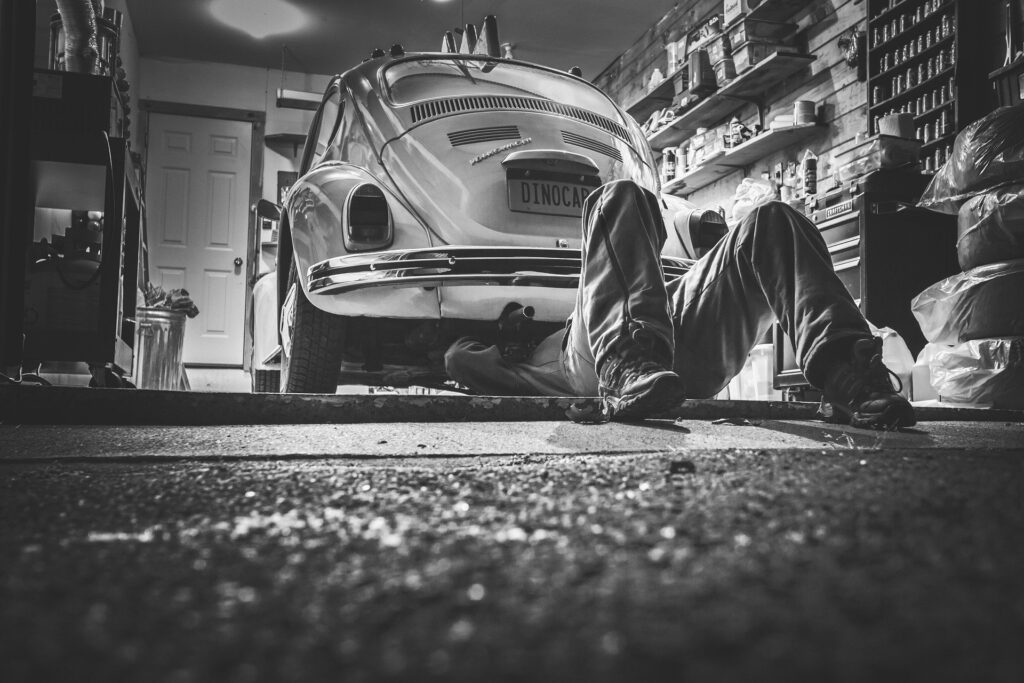
Man fixing vehicle

10 Tips to Get Your Vehicle Prepared

People spend A LOT of time in their vehicles. Whether you’re commuting in your car, running the kids to school, spending the day in your work truck, or traveling the country with your RV or motorcycle, you’re relying on your vehicle to keep you safe. Today we’ll be covering 10 handy tips on what you can do to maximize your safety on the road and in emergencies.

BONUS TIP: The biggest and best thing each and everyone of us can do is to drive safely in the first place. No tail-gating, no excessive speeding, full stops, and all that other good stuff that we learned when we were 16. This mostly involves following the law and common courtesy though, so I’m going to assume it doesn’t need to be a fully-fledged tip.

Why Now?

Because the Starks are right: Winter is coming. While Canadian winters might not involve White Walkers or unsatisfying finales, they are still a force to be reckoned with. Drivers are at the most risk in snowy, cold, or icy weather due to slippery roads, poor visibility, accidents, and road closures/breakdowns.

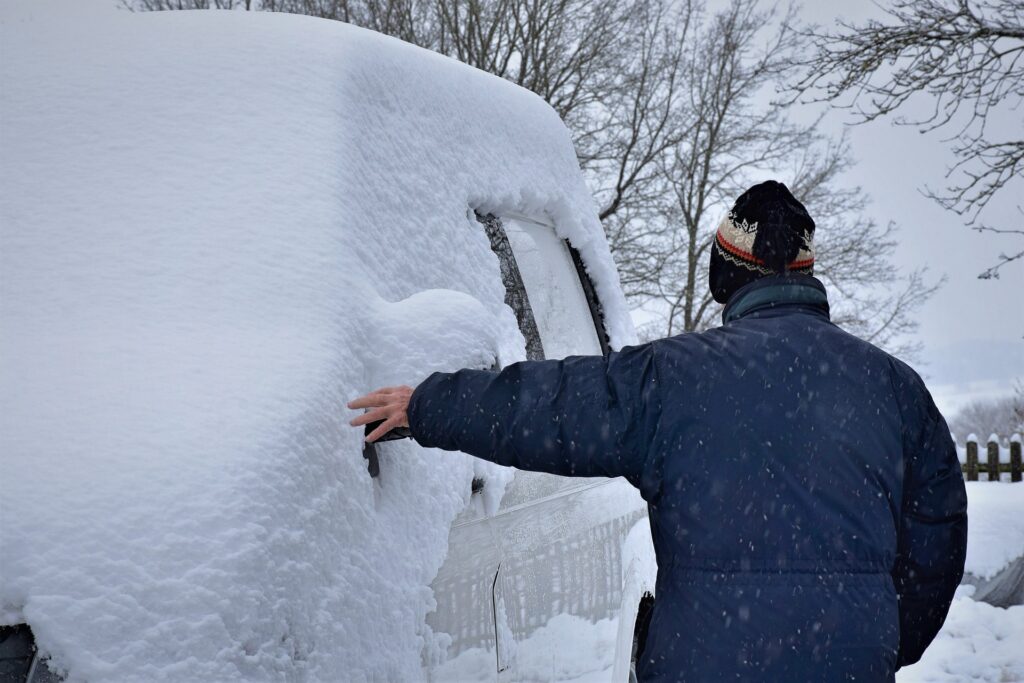
Man touches his snow covered vehicle

Holiday travel adds another layer to our usual commutes, taking us further from home and creating congestion in busy areas. Throw in Holiday shoppers and suddenly traffic is nightmarish! Even if you’re doing everything right it only takes a rogue storm to close some more rural roads. Remember a couple of years ago when holiday travellers were trapped for 24 hours on the Coquihalla highway due to snow? A little preparedness goes a long way in those situations!

Cars, Trucks, and RVs as Emergency Kits

If you have space in your vehicle, considering keeping some of your shelter in place kit there. An RV is the ultimate survival shelter after all! If your kit is your car than you can be confident it will always be with you when you need it. The sturdy shell will also insulate and protect supplies in particularly rough situations. Keeping the bulk of your kit in your car also minimizes the need for a separate get-home bag, just make sure to have a backpack with the supplies so you can move away from your vehicle with them if need be.

Work Trucks and Company Vehicles

Vehicle preparedness is especially important if you work from a vehicle, or have employees who do. The more time is spent in/around your car, the more prepared one should aim to be. Total Prepare works with transportation companies and organizations with vehicle fleets to make sure that their drivers and passengers are as safe as possible in their cars.

If you manage a fleet let us know – we’ll happily work with you to find solutions that work with your vehicles and budget.

The Tips

1. Be Winter Ready

Cold weather means less visibility, less traction, and fewer people driving with both hands on the wheel (what? They’re cold.) Happily, through the wonders of modern technology and old-fangled ingenuity there’s lots we can do to ready ourselves and our vehicles for these conditions.

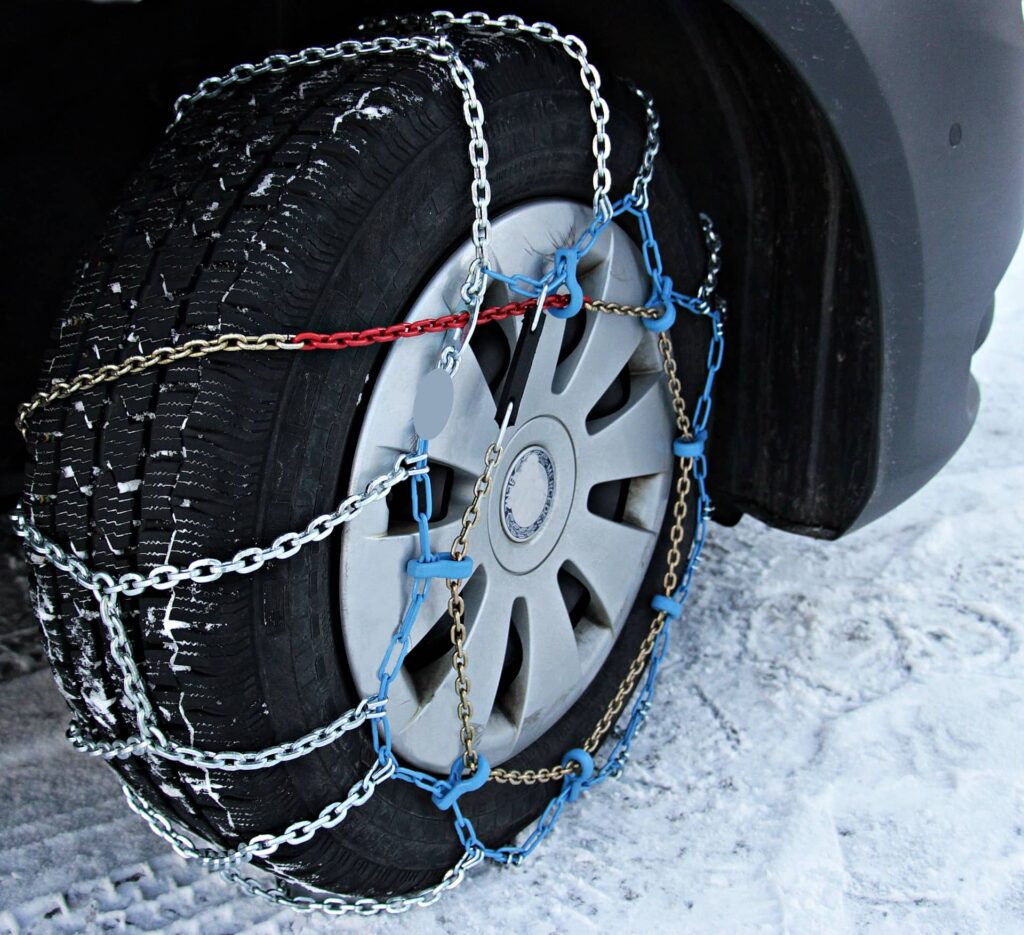
vehicle with snow chains on

Winter tires. Do I need to say more? All seasons should be an absolute minimum for this time of year, but if you’re driving up a mountain, through significant snow, or in an area known for ice, please – PLEASE – upgrade to winter tires. Carry chains and a bag of road salt in the trunk too, just in case the tires need support.

I am no stranger to driving with the tiny, clear windshield porthole on a frosty morning. It’s ridiculous, and dangerous, and my mother will have words with me if she ever reads this article. Do my poor old mother’s heart a favour and be better than me. Start early and scrape/un-fog the whole dang thing. (I’m getting better – promise!)

2. Know Disaster Response Routes

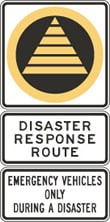
Disaster response route sign

Disaster response routes are the most efficient paths for emergency vehicles to take to and from major destinations. They’re often marked with the below sign and are vital arteries for emergency transport in the event of a disaster. Take note of these routes before an emergency happens and avoid them when an event occurs. The more cars that are on these critical roads the more difficult it will be for first responders to get where they’re needed most.

3. Get a Kit

I know we say this a lot, but it’s important: Have a kit everywhere you spend lots of time. For many of us this includes our vehicles. A little food and water, a blanket, and a way of signalling for help (sign, lightstick, or beacon) should be a minimum. Vehicle kits can be more comprehensive than this, but if you’re short on space, keep it simple.

If you’re someone who spends extended time on the move and is not comfortable answering nature’s call at the side of the road, consider adding a Restop to your glove box. The Malahat is a portion of our local highway that is notorious for eternal traffic jams and we’ve had many customers express their appreciation for a portable emergency toilet option!

4. Know How to Use It.

Supplies are only useful if you know how to use them. Many things are self explanatory, like blankets, but others can be more complex. If you pack flameless meal heaters or MREs in your car, for example, test one first to ensure you know what’s what. When you’re stuck on the side of the road is not the best time for trial-and-error learning.

If you have any questions about the use of your supplies please don’t hesitate to call our friendly team. We’re with you every step of the way. If you are near the Victoria area, feel free to drop by our store too and we’ll happily show you how to use items in person. For most supplies we have floor models in store we will happily demonstrate with.

5. Get to Know Your Car

In a perfect world, we would all drive fully functioning, like-new vehicles and maintain them at all times. Fortunately for the auto-mechanic industry, this is not so. Get to know your vehicles quirks, if it has them, so you can pre-empt any related safety issues. For example, when I was in school I couldn’t afford to replace the brakes on my 2000 Chrysler Neon. Knowing this, I could leave a LOT of stopping distance when I drove. My mum’s old car wouldn’t always start when it was cold, so she parked in indoor structures whenever she could. A friend’s car burned through a full tank of coolant in an hour, so she always carried jugs of water as a stop-gap.

… do I just know a lot of people with junk cars?

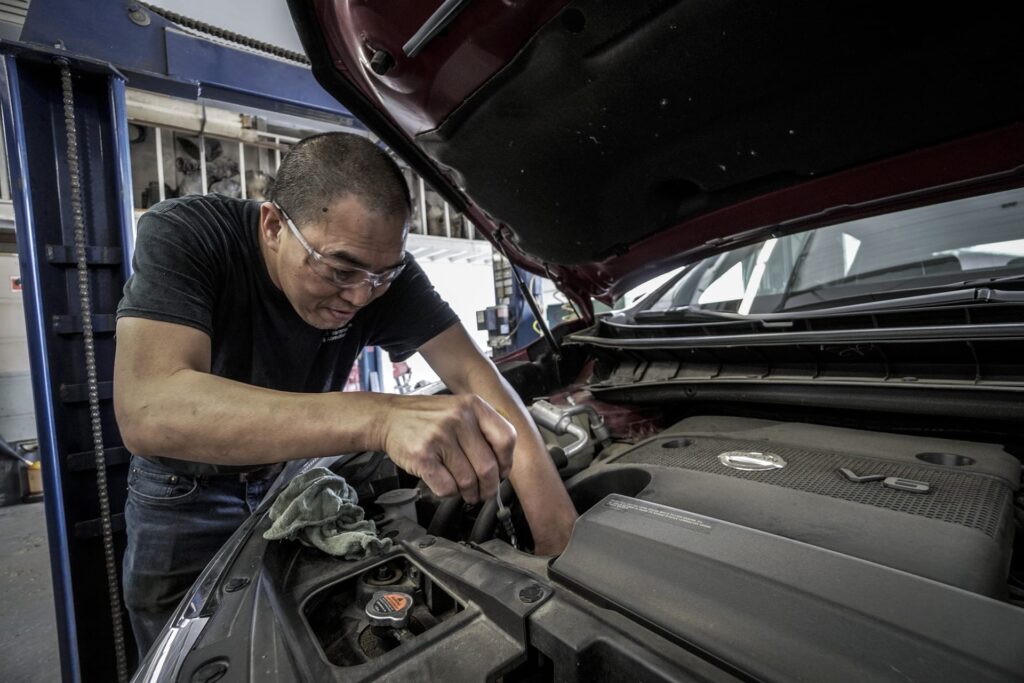
Man works on vehicle

Getting to know your vehicle also includes learning how to deal with less unique problems. Changing a tire and jump-starting a car are easy fixes that can keep a nuisance from becoming a bigger problem. No one wants to be stranded because they didn’t know how to do a simple fix! Ask friends/parents/neighbours to teach you these skills if you’re not already familiar. I keep notes in my glove box to walk myself through each process, and they’ve been used multiple times!

Vehicle Safety During an Earthquake

Earthquakes aren’t unusual in Canada. While we see the most seismic activity and awareness in BC, there are also active fault lines in Montreal and regular quakes throughout the east coast. As long as you’re not in a tunnel or on a bridge, your car is a pretty safe place to be in a quake. But what can we do to maximize our safety when the ground is shaking?

6. Drive With Caution

If you notice shaking while you’re driving, slow to a stop. Stay in your vehicle until the shaking stops, and do not leave it until there is no shaking for 60 consecutive seconds. If the roads are clear, drive slowly and carefully. People may act erratically as they try to get home to loved ones. Be patient, as roadways may be damaged or clogged.

If the roads are impassable, do your best to pull over, leaving the way as clear as possible for emergency vehicles and road crews. Grab your get-home bag, or the food/water/blanket portions of your vehicle kit, and start walking. We recommend keeping a pair of walking shoes in your car for these situations, especially if your usual footgear involves 4+ inch heels!

7. Avoid Hazards

After a severe earthquake there will be many unusual hazards to watch out for on the road. Some will be predictable – congestion, more emergency vehicles, and downed power lines – but some will seem almost alien in their incongruity – liquification, shattered streets, or huge sinkholes. Make sure that you’re moving slowly enough to stop if any of the above appear in your path.

Road hazard during an earthquake

Driving in a Winter Storm/Blizzard

It wouldn’t be a Canadian winter without at least a few good blowers. It’s our national brand after all! But if you’re caught driving in a bad storm, there are a few things you can do to keep safe, or to stay warm if you’re stranded. We’ve written on this topic before, so check out this post for an in-depth look at snow/vehicle safety.

8. Don’t!

If at all possible, don’t drive in a storm or blizzard. Grab a book and a blanket and snuggle up by the fire instead. The beer run can wait. Stay with friends or offer your couch to guests who would otherwise need to get behind the wheel. In many blizzards visibility can get so bad that even crossing the street can be an opportunity to get lost!

9. Stay in/with Your Vehicle

If you do get stuck/stranded don’t wander into the storm. Your car is shelter and your odds of noticed by others is much greater if you’re with a vehicle. It will also shield you from the wind and snow. Do your best to stay visible with emergency lights and signs so passing cars know you need help.

10. Be Mindful of the Dangers

Even if you are simply taking shelter in your car there are hidden dangers that you need to be wary off – especially if there is heavy snowfall. Running the car to stay warm is great, but if your tailpipe becomes plugged with snow you’ll run a high risk of carbon dioxide poisoning. If you’re trying to dig yourself out, or clear a perimeter around your vehicle, take regular breaks and be careful not to strain yourself. Heart attacks are very common in these situations. As we mentioned above, we have covered these topics in more detail here.

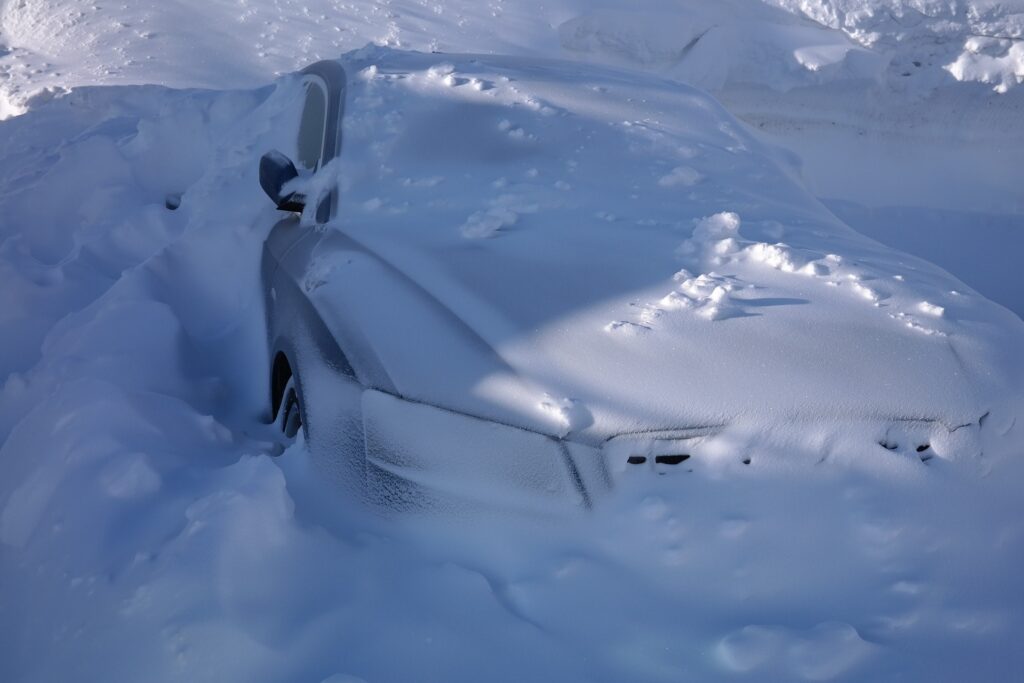
A vehicle buried in deep snow

Summary

Ninety percent of safe driving is common sense and some basic skill. The other 10% is preparation. Know your vehicle, your kit, and your local emergencies like the back of your hand, and you’ll stand the best chance of arriving safe and sound to any destination. Drive carefully, give space to other drivers, and be sure to have emergency supplies in your vehicle.

Bonus tip! There’s a piece of advice my mother gave me that I think really fits with these tips. If there’s an idiot on the road, make sure they’re in front of you. That way you never have to rely on their reaction times, only on yours. Hopefully that wisdom comes in handy – I know it has for me!

Thank you for reading! Share your questions and comments with us below – we’d love to chat.

This article was written by Zenia Platten – Author of Tethered and Emergency Preparedness Professional.