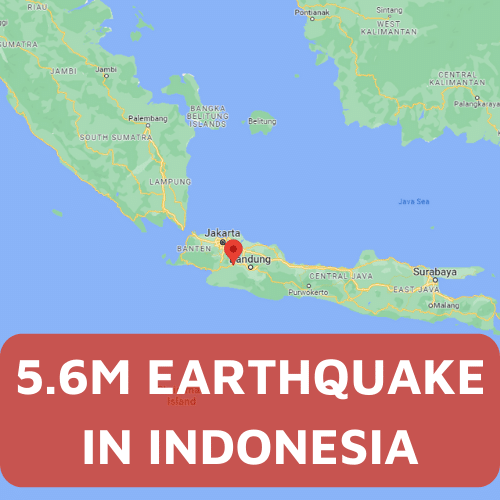
A 5.6 magnitude earthquake in Indonesia devastated the Cianjur region on Monday November 21, 2022. While earthquakes of this magnitude are not unusual for the country, the shallow epicenter (just 10km deep) and the lack of seismic infrastructure in the area multiplied the damage. The quake came at about 1:21pm, local time, destroying buildings and causing at least 268 deaths. Tragically, many of these deaths were children and young people studying in their classrooms.
The earthquake in Indonesia also caused a landslide in the village of Cijedil. The collapsed earth blocked roads and buried houses. In total, over 13,000 people went to evacuation centers after the quake, their homes destroyed. Even with shelter offered, however, thousands of people chose to spend the night in the open for fear of aftershocks. A valid fear, as there were 25 aftershocks in the first two hours after the tremor.
At least 50 schools were effected, and over 22,000 homes destroyed. Blocked roads kept rescuers from being able to reach those that were trapped in the rubble right away. Hospitals and clinics became quickly overwhelmed, with some hospitals converting their parking lots to make-shift treatment spaces and working without power.
An earthquake in Indonesia is not a rare occurrence as the country is located in the Ring of Fire. This area around the edges of the Pacific ocean is the most seismically active zone in the world. Dotted with volcanos and fault lines, it spans from Japan to Indonesia on one side, and along the western edge of North and South America on the other.
What can we learn from the earthquake in Indonesia?
The Ring of Fire includes the coast of BC in Canada. If you would like to learn more about earthquake risks in BC, we would highly recommend the Fault Lines podcast by the CBC. If you’re interested in learning about earthquake safety and planning, we also have a blog post on the subject. Educating ourselves about the best ways to prepare is one of the best ways to get prepared in case an event like the earthquake in Indonesia arrives on our doorstep.
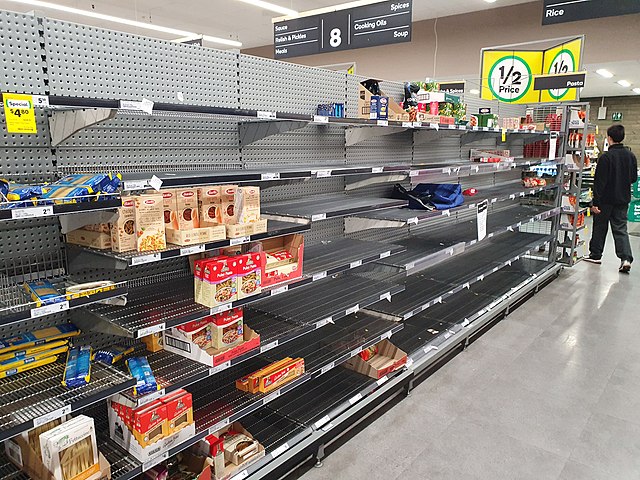
Canadians are lucky to live in a wealthy, stable country, but could we see food shortages in Canada in 2023? With Canadian food banks facing massive increases in demand since the covid-19 pandemic, many people are beginning to ask these questions. With factors stacking up, it’s looking likely that a global food shortage may be in store for 2023.
The Levels of Food Shortages
Before we jump into this topic, let’s quickly review the differences between types of food shortages. The terms ‘food shortage’ and ‘food insecurity’ are both used when there is not enough food to meet the needs of an area. The IPC (Integrated Food Security Phase Classification) classifies different levels of food insecurity as follows:
None/Minimal – People have enough to eat and their livelihoods are sustainable.
Stressed – There’s still enough food, but barely, and livelihoods are becoming stressed.
Crisis – Resources are becoming inadequate. Nutritional statuses are getting serious and we begin to see an increase in mortality rates.
Emergency – Resources are extremely depleted, and food availability and consumption become very inadequate.
Catastrophe/Famine – Livelihoods are described as ‘near collapse,’ and mortality rates are at their highest.
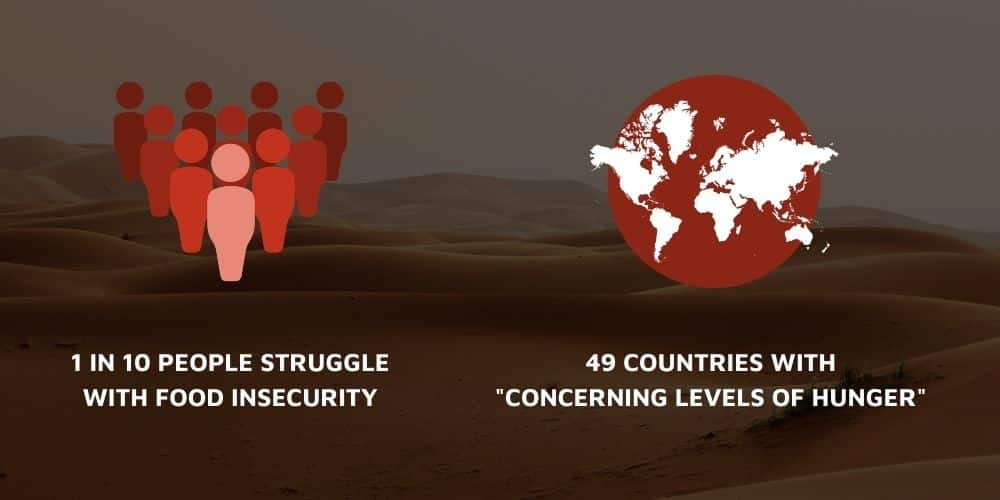
According to the World Food Programme, “the world is facing a food crisis of unprecedented proportions, the largest in modern history.” They say that a total of 49 million people in 49 countries are teetering on the edge of famine (the worst kind of food shortage). Looking at overall food insecurity, 828 million people are going to bed hungry each night. That’s 10.6% of the world’s 7.8 billion people.
Causes of Food Shortages
Conflict – In many high-hunger countries violent conflict is a major cause of food crisis. Land and assets are taken, destroyed, or have to be abandoned in these situations. Conflicts are often caused by economic or political turmoil that escalates to the boiling point.
Climate – floods, drought, and unseasonable freezing are on the rise globally. This can be devastating for farmers and families trying to maintain gardens, crops, and/or livestock.
Covid-19 Pandemic – Is there anything the pandemic hasn’t effected? In the case of food shortages in Canada and the world, the economic impact of covid-19 has made food more expensive. Often, this expense goes hand in hand with scarcity and empty shelves.
Cost of Aid – The World Food Programme reports a 44% increase in it’s monthly operating costs since 2019. This reflects price increases across the board. “The extra now spent on operating costs would have previously fed 4 million people for one month.”
Russia/Ukraine Conflict – Ukraine is one of the major grain producers in the world, exporting to feed millions of people worldwide. According to World Vision “by May 2022, Ukrainian farmers had 20 million tons of grain they could not get into international markets.” Russia also produces and exports large amounts of grain. They have frozen their trade with non-Soviet countries. While this effects countries reliant on their grain first (India, Egypt, Turkey, and China to name a few), the vice-president of the Ontario Federation of Agriculture’s immediate concerns are in fertilizer…
Will there be food shortages in Canada?
Russia is a major global supplier of fertilizer, and the tariffs imposed on the import of it is worrying Canadian farmers. Mark Reusser, vice-president of the Ontario Federation of Agriculture and the Waterloo Federation of Agriculture, spoke to the CBC about his concerns. Between the rising costs of fertilizer, fuel, crop protection products, land, and labour, growing food is becoming an expensive business.
If supplies are limited and crops are expensive to produce, Reusser predicts that farmers will begin to triage – prioritizing the crops that make the most money to sustain their livelihoods. This would lead to a big reduction in the variety that Canadians see on their supermarket shelves.
“I can’t predict the future. All I will say is that the supply of fertilizer right now is precarious, and we are very worried as farmers about the supply for the coming year, so that would be the crop year of 2023.” – Mark Reusser
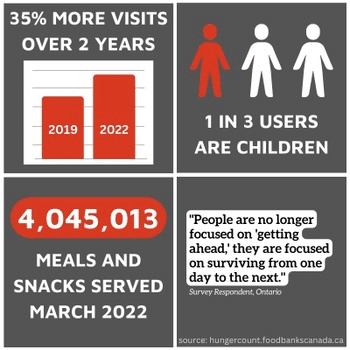
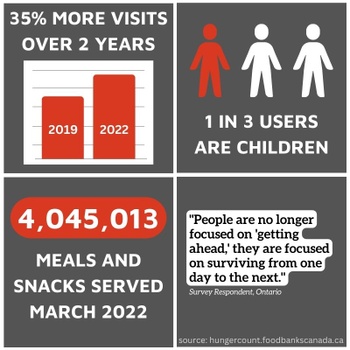
I’ll admit, this is a little worrying, especially when coupled with Canada’s Hunger Report, citing a 35% increase in visits to Canadian food banks between 2019 and 2022.
What can I do?
Magnificent question, brilliant reader! The best way to help others who are struggling with hunger is to donate to your local food banks, run a food drive, or donate to charities fighting to stop hunger. Every donation counts and puts food in empty bellies! If you want to organize a food drive, but don’t know where to start, check out this article by Rotary International.
Total Prepare can also help you to prepare yourself and your loved ones for the possibility of food shortages. Stocking up on shelf-stable emergency food is a great way to make sure that you have something to eat, even when the shelves are bare. Climate allowing, we also recommend starting a food garden to bulk up your pantry where possible. Legacy food is a personal favourite for their large serving sizes and great taste. A Combo Bucket was my first emergency food purchase, in fact! This one will last one person over 3 weeks, eating 2000 calories per day.
Victoria, British Columbia (Newsworthy.ai) Tuesday Nov 15, 2022 @ 7:00 AM Central — Total Prepare Inc, Canada’s number one source for emergency preparedness products, has created the Emergency Food Rescue Program to help Canadian food banks keep up with growing demand.Between 2019 and 2022 there was a 35% increase in visits to Canadian food banks as more Canadians turned to food banks for their meals due to financial hardships from the pandemic, increased costs of living, and low social assistance rates.In contrast, many companies, government organizations, and individuals are sending expired emergency preparedness meals to landfills for disposal every year.
The Emergency Food Rescue Program was created to help solve these related challenges — food banks needing more meals, and expiring food being sent to landfills.
“We encourage organizations and individuals with emergency food stores to donate their soon-to-expire food while it can still help others”, says Ed Pierik from Total Prepare, Inc. “It needs replacing anyway, why not use it to be a hero in your community?”
The benefits of donating emergency food:
Feed your community. It’s just the right thing to do.
Keep useful food from the landfill.
Reduce or eliminate disposal costs.
Large donations are often eligible for charitable tax receipts.
“The Emergency Food Rescue program is an innovative initiative that we hope will result in more food getting to folks in need whilst raising further awareness about the challenges food banks are facing. Food Banks BC applauds Total Prepare Inc’s willingness to support our network during this time of greater need.”, commented Dan Huang-Taylor, Executive Director, Food Banks BC
On the Emergency Food Rescue Program website, emergency preparedness meals that have not yet expired may be ‘registered’. Total Prepare will send reminder notifications when items are nearing expiry, and help organizations connect with food banks in their area. Total Prepare also provides special replenishment rates for organizations that have donated their old supplies. This video shows how to find the expiration date of your MREs.
For more information visit https://totalprepare.ca/emergency-food-rescue-program/
Founded in 2012 and owned and operated in British Columbia, Total Prepare is Canada’s number one source for emergency preparedness, offering survival kits, Meals Ready to Eat (MRE’s), freeze-dried and dehydrated emergency food, water storage and filtration, and other emergency preparedness products. For more information visit https://totalprepare.ca/
Autumn fast approaches with thousands of post-secondary students moving from home to their dorms, sometimes facing true independence for the first time away from family. With great freedom comes great responsibility. As a post-secondary student, you are responsible for keeping yourself alive whilst gaining new experiences, knowledge, and understanding of yourself. Transitioning to post-secondary is accompanied by many challenges – not limited to simple things like homesickness and time management – and can include emergencies. Different geographic regions of Canada have different natural disasters common to them, but even simple power outages can really throw off your day.
In post-secondary, you are now responsible for your own safety, suddenly self-sufficient. This isn’t limited to safety in your social life either. Many colleges will not practice emergency drills, so you need to know what to do. Explore your campus, know your routes, and be aware of multiple exits in case of evacuation. Make sure these routes include staircases! (You’ll want to stay out of elevators in case the electrical is effected.) The phrase “take care of yourself” no longer just means dressing for the weather or drinking enough water. (Drink some water now for good measure!) In the case of a major emergency, you should be prepared to be self-sufficient for 72 hours- even if you live in residence. It may sound extreme, but if you’re ready, you’ll be able to respond confidently and safely during a situation.
Campus Emergency Plans
Post-secondary campuses all have specific emergency plans including Crisis Management, Emergency Response Plans, and Seismic Resilience plans. These can usually be found on your school’s website under the services tab. It is an excellent idea to become familiar with their policies. Some institutions even have their own apps with easy access to emergency phone numbers, student wellness services, and bulletins for the latest updates and communications – for example Camosun and NSCAD, but search for your own post-secondary school. Consider also following the social media channels of your institution and the campus police for any news and events – McGill has a Twitter feed for their campus security, as does UVic. For those living on campus, it is important to get the contact of your RA/CA (Resident or Community Assistant), not only for emergency purposes but also for any questions which may come up – they are there to help and provide liaison and guidance as needed.
Some post-secondary institutions also offer free training opportunities for interested students ranging from basic emergency preparedness to CPR and NARCAN training- skills that would benefit anyone to have. These courses may be held in person, or online- Simon Fraser University offers NARCAN training online here where you can take this training at your own convenience before picking up Naloxone kits in person! Take advantage of acquiring any free knowledge you can get access to – attend lectures, seminars, and courses. You never know when you’ll use it. Some of these courses you may never want to have to use the knowledge from, but if it’s needed at all you’ll be grateful to have been able to help. Plus, free courses can save you hundreds of dollars, and look great on a resume!
Emergency Kits
As a basic life rule, you should have a emergency kit. You can buy one, put one together from scratch, or supplement a base kit.
What should an emergency kit contain?
First aid kit
Flashlight and extra batteries
Signal whistle
Emergency blanket
Emergency rain poncho
N95 mask
Pocket-sized pack of tissues
Food that won’t spoil—enough for 72 hours
Four liters of water per person per day
Battery-powered or wind-up radio
Cash and coins for vending machines
Contact information for friends and family (in case your mobile device runs out of power)
Plus, include special items, such as:
Prescription medications
Toiletries
Glasses or contact lenses
Equipment for students with disabilities
Print outs of important documents (passports, birth certificate, etcetera)
Our offerings
“What post-secondary student has time to put together a kit?” you may ask! We can’t write your exams for you – but emergency kits are one area where we can make life easier.
Small budget? No Problem!
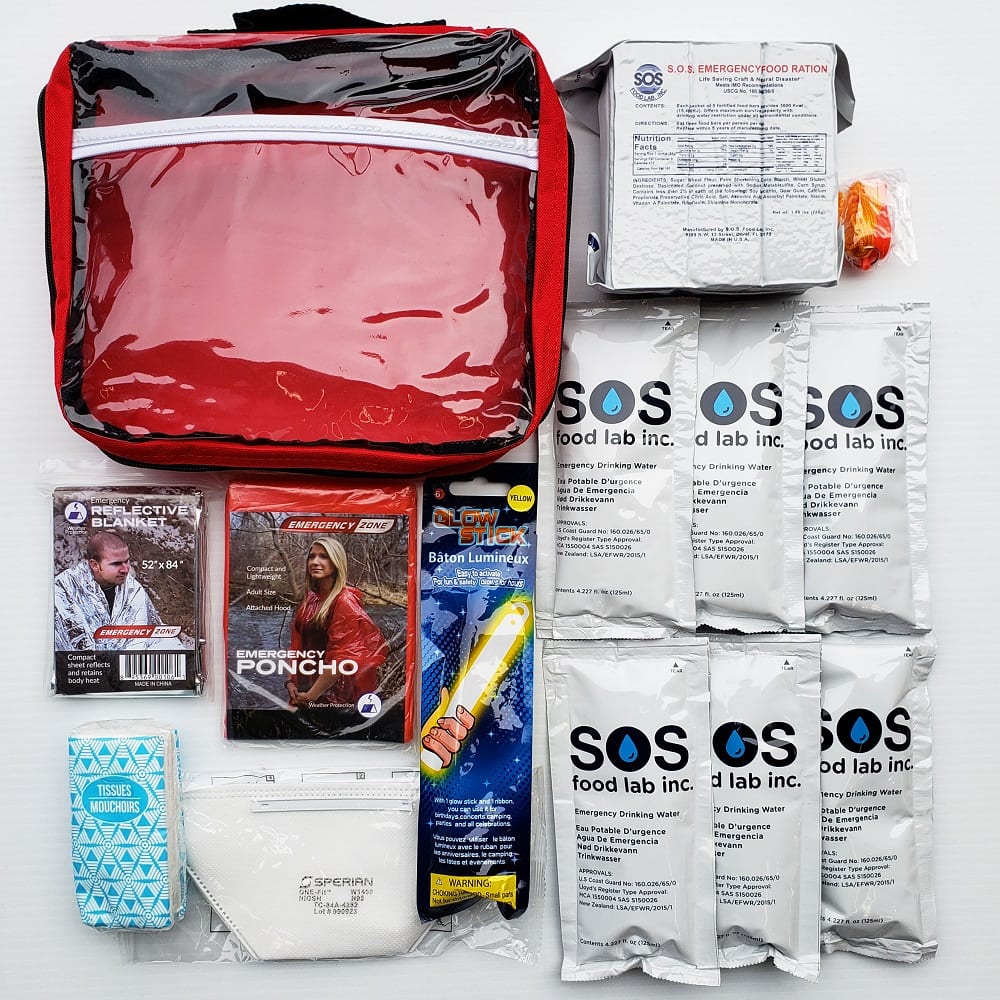
We offer a few different kits which either work well as stand-alone models or as bases to build on. The 72 Hour Individual Essentials Kit is quite budget friendly – around $30 (plus shipping and taxes) leaving you more budget for the absurd cost of textbooks! Dorm rooms are notoriously small, so the compact size of this kit is a huge bonus. It contains enough food for one person for three days. It’s also small enough that you can fit it into your backpack and carry it every day.
The Individual Essentials Kit
Larger Budget?
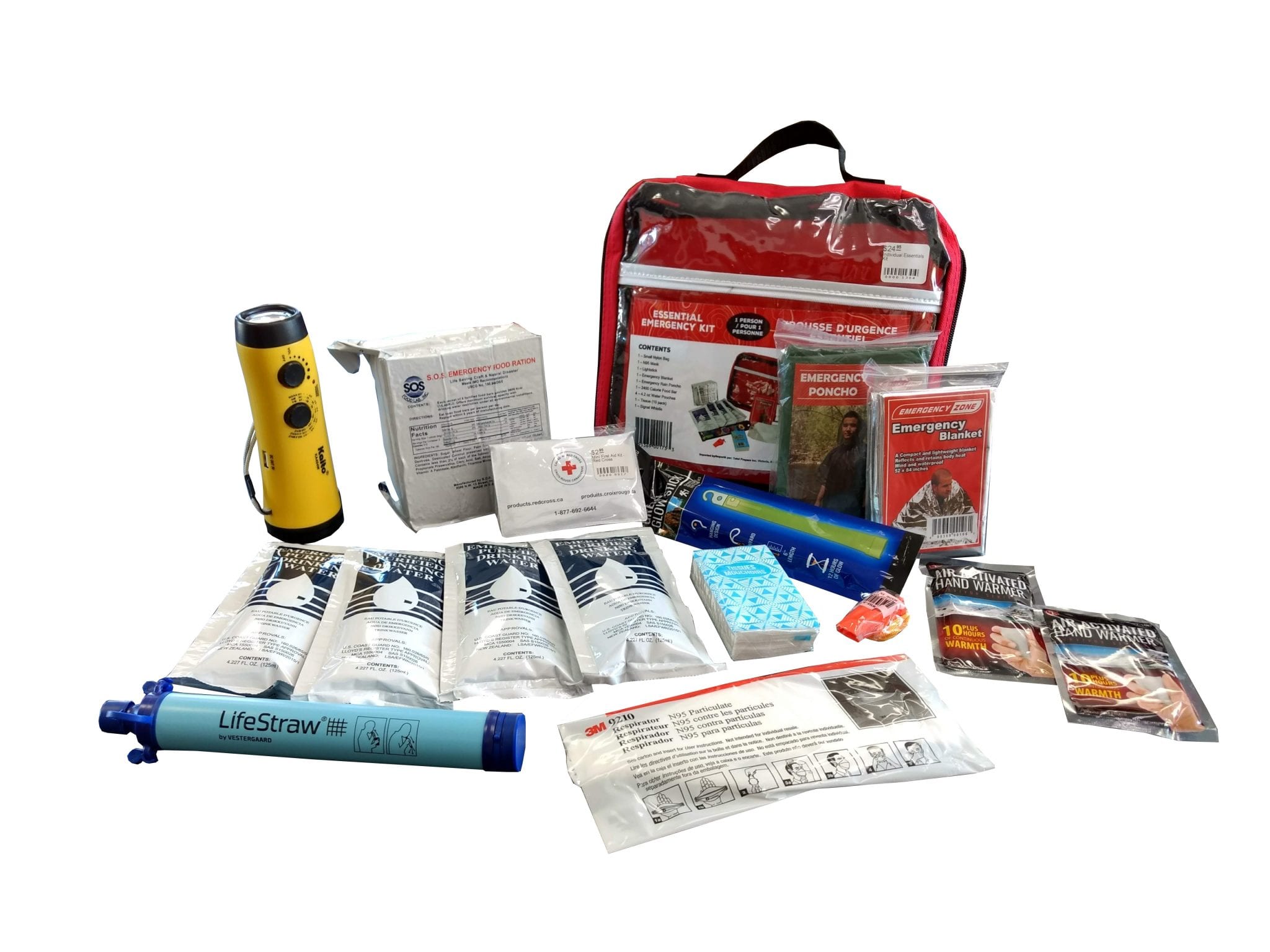
If you have a larger budget, The Legion Survival Kit comes in at just around $100. The Legion kit
uses our Individual Essentials Kit as a base and adds a LifeStraw Personal Water Filter, Kaito crank flashlight/radio, handwarmers, and a Mini First Aid Kit. Instead of adding additional water pouches to meet 72-hour requirements, this kit features the LifeStraw Personal Water Filter. The LifeStraw Personal Filter weighs less than 1 pound and can filter out bacteria and protozoa from fresh water sources. It will filter up to 4000 liters of water and takes about as much effort as drinking a thick milkshake. It’s even great for hiking excursions!
Legion Survival Kit
We’ve got your back(pack) too!
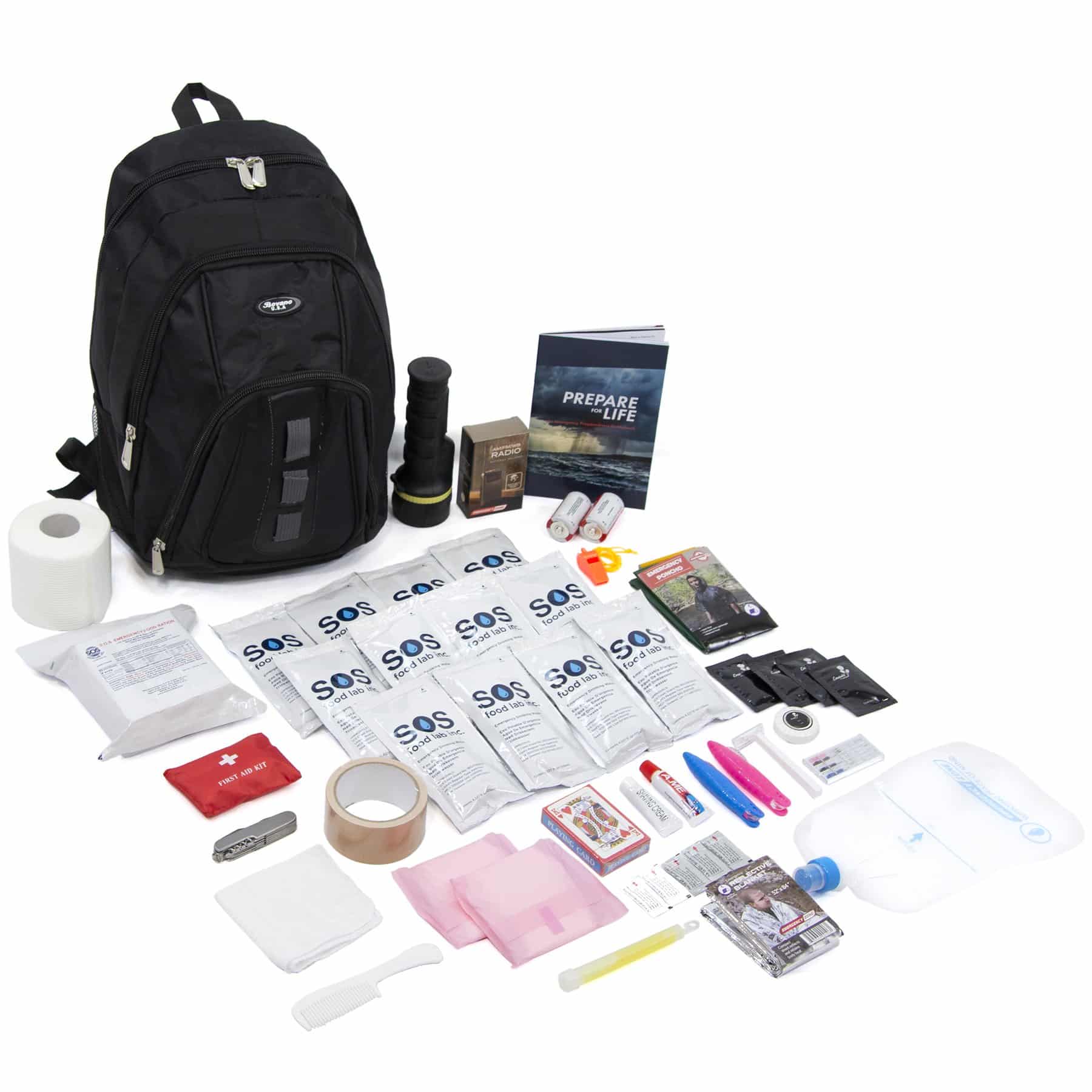
If you wanted something in a backpack for your dorm kit, or to use as your everyday campus backpack (if you don’t have to constantly carry your textbooks for your classes) – we also offer the 72 Hour Backpack Survival Kit. It’s similar in price to, but weighs a fair bit more than the Legion Survival Kit. However, it’s a more encompassing kit, even including a hygiene and sanitation kit, and a deck of cards and an extra pencil. (Trust me, carry an extra pencil and some paper around campus anyways – it can be real lifesaver even if you take notes on your laptop.)
72 Hour Backpack Survival Kit – 1 Person
Bonus
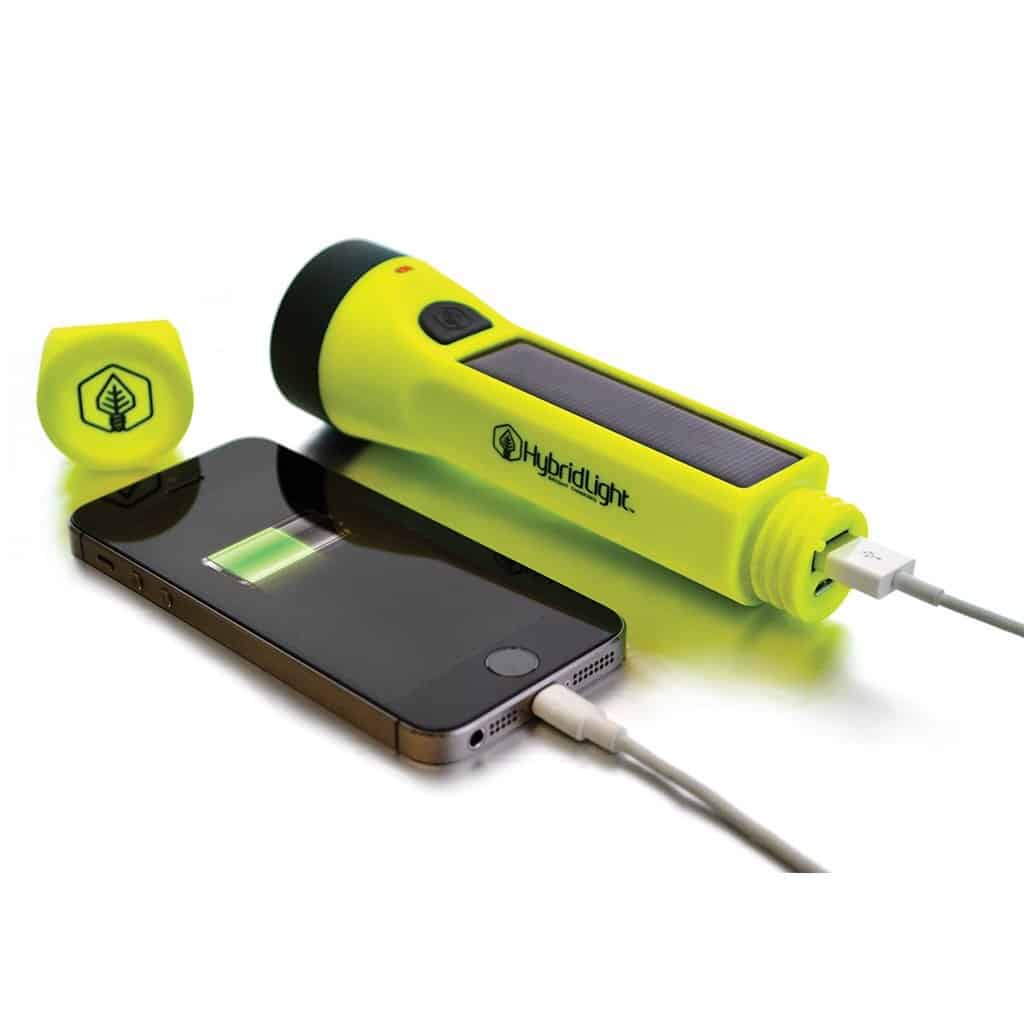
For an add-on item, I’d strongly suggest checking out the Journey 300 Solar Flashlight/ Charger. You never know when campuses will have power outages, and the nights are only getting longer. Plus, if you get home from a late night of partying its more considerate to your roommates to minimize lights at 4am and a flashlight is perfect for that- don’t be that guy! This nifty flashlight is the most versatile, multifunctional, and rugged flashlight from HybridLight yet. It can shine for up to 50 hours, is waterproof, floats, and is lightweight. It can be charged either via solar or with a standard micro-USB cable, and arguably most importantly- even functions as a charger in and of itself!
Thanks for reading! Let us know how you or students in your life are prepared in the comments!
Working in the emergency preparedness industry, we spend a lot of time thinking about how long we need to be prepared for to survive a disaster. But what about once the supplies run out? How long can you survive without food? Without water? Without air? Without shelter? In this article we will be looking at how long a human can survive without the basics of survival. We will also cover the effects of missing crucial supplies.
In all these cases we will be providing an average. Timelines can vary a lot based on the individual’s situation, physical state and history.
How long can you survive without food?
Credit: RitaE on Pixabay
According to the Journal of Nutrition, there seems to be a set parameter for healthy BMI, with a minimum BMI (body mass index) at which humans stop being able to sustain life. For men this is a BMI of 13 and for women, 11. How long can you survive without food with those minimums? On average, you can survive for up to two months without food. However, humans need adequate water supplies to achieve that timeline. It goes without saying that it’s illegal to study starvation in humans. Therefore, these numbers are derived from studying voluntary hunger strikes that ended with the participants experiencing life-threatening symptoms.
What happens when you don’t eat enough?
Over the first 72 hours of starvation, our bodies make adjustments to how they create energy. Once there is no food left in our systems to turn into glucose (AKA: body fuel), we begin to convert glycogen from our livers and muscles. From there, our bodies begin to use amino acids for energy. Between these three fuel sources, we can usually go for 3 days without food before our metabolisms have to undergo some major changes.
To prevent too much muscle loss, the body begins to burn fat stores to keep us going. In a process called ketosis, the fat is turned into ketones for energy. Due to a higher fat content in our bodies, women will generally survive longer without food then men. The more fat stores a person has, the longer they can survive starvation.
Once the body is out of fat, it will revert to burning the remaining muscles for fuel. Generally speaking, serious medical side effects will start kicking in when a person has lost 18% of their body weight. However, they should be monitored after losing just 10%.
Please do not try this at home.
Recommended Supplies
We are incredibly lucky to live in a country where, in most cases, relief or aid will come after a major emergency. However, emergency responders recommend keeping 1-2 weeks of food on hand to be self-sufficient in a disaster. This helps to keep people from drawing on limited communal supplies without need.
Have you heard the old rule of threes? “Three minutes without air, three days without water, and three weeks without food”? While it is a snappy way to remember a broad guideline of how long we can go without, it’s not entirely accurate. As we’ve already seen, people can survive for months without food in the right conditions. So, what’s the truth about water?
On average, it’s only people on their death beds with very little energy who won’t last more than a few days without water. Average people, in the right conditions, can go from 8-21 days before dehydration will be likely to cause death. Of course, there are many factors that affect this: environment, activity, age, health and food intake (many foods contain moisture.)
What Happens?
People are constantly losing water through sweat, urine and even breathing. As our bodies begin to dehydrate, our cells shrink and our brains will signal our bodies to reduce urination. This can take a toll on our kidneys as they require water to function well.
Eventually, dehydrated kidneys will fail to flush waste from our bodies and other organs may also stop working. Our bodies will stop regulating temperature, our electrolytes will become unbalanced, our joints may ache, blood pressure can increase/decrease and our brains might even swell.
Symptoms of severe dehydration include:
Fatigue
Heat cramps/stroke
Seizures
Hypovolemic shock (what happens when your heart can’t pump enough blood)
Organ failure
Death
Recommended Supplies
As with food, professionals recommend keeping 1-2 weeks worth of water on hand for emergencies. This can be stored water or a way to treat fresh water from creeks, hot water tanks, rain barrels etc. Generally speaking, you want to budget 2 liters for drinking, 1 for sanitation and 1 for cooking. That’s 4 liters, per person, per day. For example, a family of four would want to store 112 liters for a week’s supply. Click here for our comprehensive post on water supplies.
How long can you survive without sleep?
Credit: Daniela Dimitrova on Pixabay
Yes! You can die if you don’t sleep! But you don’t need to worry the next time you pull an all-nighter to finish an assignment, take care of a sick child or party until the sun comes out – death from a lack of sleep is extremely rare.
The longest time on record for not sleeping is approximately 264 hours (11 days) – though scientists aren’t certain how long it would take to kill you. (For obvious reasons they frown on testing that sort of thing.)
What Happens?
As I mentioned, one all-nighter isn’t going to kill you. That doesn’t mean that there are no consequences for missing your Zzzzz’s. After 24 hours without sleep, you’re considered about as functional as someone with a 0.10 blood alcohol level. Therefore stay out of motor vehicles and away from heavy machinery. You are likely to experience drowsiness, irritability, impaired judgement, memory deficits and even tremors.
Things start getting a little more serious after 36 sleepless hours. Your body uses your sleep cycle to regulate things like hormones. Not getting to rest can start to affect your body at this point, including:
Appetite
Metabolism
Temperature
Mood
Stress levels
At this stage we can add risky decisions, inflexible reasoning, decreased attention, speech impairments and decreased motivation to our list of symptoms.
If you miss two nights of sleep in a row, you’ve been awake for 48 hours. At this point, your brain will be forcing you into ‘microsleeps’ – little 30 second periods where the brain is in a sleep-like state. These are involuntary and can end in confusion and disorientation. Your immune system will also become sluggish at this point, becoming worse at responding to immediate threats like bacteria and viruses.
If, for some reason, you find yourself awake after 72 hours then you have my deepest sympathy – it does not sound like fun. Most people can’t stay awake without assistance after 3 days. At this point, the wakeful are having trouble completing simple tasks, multi-tasking, remembering detail and paying attention. They may experience depression, paranoia or anxiety. If that’s not enough, after three days hallucinations and illusions can begin to kick in.
Recommended Supplies
Honestly, there’s not much in supplies that can stave off true sleep deprivation. But there are options that can make you more comfortable in an emergency and more likely to sleep. Things like sleeping bags, tents and blankets are good additions to any kit. If you need medications to help you sleep, talk to your doctor about the possibility of getting extra doses for the emergency kit. Be sure to rotate through it to keep it fresh.
How long can you survive without air?
It would feel wrong to do an article on survival times and not touch on the one thing we all need most: air. Drowning and smoke inhalation are the two most common ways to die from a lack of oxygen. Our brains need it constantly, using about 20% of our body’s supply.
While there are certain situations where people have been known to survive for up to half an hour without air (pearl divers, free divers and drowning incidents involving hypothermia), that is far outside the norm. For us average folks, our brains can withstand about 3-6 minutes without oxygen until serious brain damage occurs. After 15 minutes without air, it is very rare for a person to regain any brain function.
In general, we’ll fall unconscious after 1-2 minutes without air.
Recommendations
An ounce of prevention is worth a pound of cure when it comes to suffocation. While there aren’t a lot of supplies to add to a kit for suffocation – short of CPR masks – there are some tips to help you stay safe:
Wear a lifejacket during water sports or if you are a weak swimmer
How long can you survive without answering the Call of Nature?
Warning – you might want to skip this one if you’re squeamish.
Credit: Tama66 on Pixabay
Yep – you can die without it. Relieving oneself is a critical function for humans, allowing our bodies to get rid of harmful waste. Because we all have different diets and lifestyles, there is no formal timeline for death by constipation. However, if you haven’t answered nature’s call for a week or more, it might be worth looking into over the counter assistance or talking to your doctor.
Depending on your age and health, 5+ weeks is probably in the danger zone for serious health issues/death. Conveniently, there is a handy symptom list to help you decide if it’s been too long since your last visit to the facilities.
Bloating
Feeling the need but not having the ability
Nausea
Not passing any gas
Stomach pains
Vomiting up things better left to the other end (yuck!)
What Happens?
There are a handful of complications that arise when the body does not have a chance to flush waste. Due to an increase in inflammation and stress in the body, the patient may be at an increased risk of cardiovascular events like heart attacks. Not being able to flush waste can also be very difficult on ones kidneys, as they are responsible for processing your waste.
The most direct complication, however, is bowel perforation. Unfortunately, it is exactly what it sounds like. If too much pressure builds up in your intestines they can tear, allowing waste into places it was not meant to go. Human waste is acidic and contains bacteria, so this can cause life-threatening symptoms.
Recommended Supplies
Constipation can be caused by stress, ‘holding it’ too long, diet choices, or dehydration. Besides having adequate food and water in your emergency kit, ensure that you have somewhere to go, toilet paper, and hand sanitizer. This helps people to feel more comfortable and will minimize ‘holding it’ syndrome. Supplies might include a simple shovel and garbage bags or a more familiar portable toilet, and privacy shelter.
Summary
How long can I survive without…? Most people can go much longer than they think without life’s basic necessities, but the results of doing so are rarely pleasant. It is prudent to keep emergency kits in strategic places and a shelter-in-place kit at home so you always have what you need to survive comfortably at your fingertips.
Thank you for reading!
This article was written by Zenia Platten – Author and emergency preparedness professional.
In the spirit of apocalypse planning, let’s talk about really long-term survival strategies. In a zombie outbreak or other cataclysmic event you may find yourself needing to build or repair structures without the help of a construction company. While building a simple survival shelter will keep you alive in the short-term, the comfort and convenience of buildings can’t be overlooked. This is why it can be a good idea to learn the basics of carpentry, or even stonework, prior to an apocalypse.
Seek Real-World Guidance
The internet has hundreds of thousands of resources to help people learn how to use tools and build. If you are serious about learning more than just the basics, however, seek out a course or mentor in your area to learn. There’s nothing like in-person lessons for physical skills – especially ones with potentially dangerous power tools!
I LOVE my power tools. Nothing beats the convenience of drilling a hole in seconds or sawing through a piece of wood without breaking a sweat. Practical, time-saving know-how like this can come in handy in everyday life. Keep your skills and tools sharp and maintained in case you still have access to a generator in an emergency. However, electricity may not always be available, so practice with the non-powered alternatives too.
Don’t Stop at Tools
Once you know how to saw wood in two and hammer a few nails, you’re done, right? Wrong! There’s a reason people go to school for years to become tradespeople. In the apocalypse you probably won’t need to have your Journeyman’s ticket in a trade (though it can’t hurt!) but you need to know a little more than just basic tool use.
Choose a few small projects to build and find plans that look simple to follow – or ask your teacher/mentor for good places to start. This will help you get a feel for how to fit pieces together in a secure way and create solid corners and joints. You also get something neat to show off to your friends and family!
Practice, Practice, Practice
The fastest way to learn any skill is to practice using it and learn from your mistakes. Once you have the basics down, choose more ambitious projects and keep using your skills. The more you learn, the better off you’ll be in a post-apocalypse.
Know Where to Find What You Need
Have a route planned to your local hardware store and lumber yard. Even if you don’t have the space or resources to keep your own tool-stuffed workshop, if the world ends, you can likely borrow or trade for some tools and materials to get you started.
Summary
Hopefully, we will never see a world like those portrayed in Mad Max, Water World, or Robins
on Crusoe where we will need to build our own shelters without the help of a community. Still, it never hurts to be prepared, and the ability to build your own shelters and furniture is useful in day-to-day life as well.
If you’re like me and need your power tools when it comes to carpentry, check out our line of Goal Zero solar generators so you never need to be without your beloved drill or table saw!
This article was written by Zenia Platten – Author and emergency preparedness professional
In a world where fast fashion is the norm, fewer people learn how to make repairs to their clothing. Have you ever thought about how important clothing is to our survival? It’s the most basic form of shelter humans have. It keeps us warm in the cold, keeps us safe from sunburns, and offers protection from bugs, wind, and scrapes. But what happens in the apocalypse when there are no boutiques or department stores to shop in? What do we do when we only have the clothes on our backs? (Or in our wardrobes?)
In this Tips for the Apocalypse article, we’ll go over how you can make your clothes last. As with our other articles in this series, these tips can be practical for your day-to-day life too. Just think back to the start of the Coronavirus pandemic in 2020—sewists the world over could hardly keep up with the demand for handmade cloth masks. You never know when your new skills will come in handy!
Where to Start and What to Learn
The most important sewing skills to learn in case of a long-lasting emergency are:
It also helps to keep a small stock of supplies to work with. Most sewing supplies (especially for hand sewing) are small and therefore take up little space. Our top suggestions are:
Fabric scissors (don’t cut paper or other materials with them!)
Sewing needles
A seam ripper
A measuring tape
Spools of thread in various colours, like black, white, and brown
A pincushion with pins
Chalk or a water-soluble white pencil
Your local dollar and craft stores will carry most or all of these materials. And if you don’t have the funds or space for these, even a tiny pocket-sized sewing kit is better than nothing!
Making Repairs
No piece clothing lasts forever. In a catastrophic emergency, you’ll need to know how to get the most out of your wardrobe, no matter how extensive it is. But if you know how to make repairs and repurpose fabric into other items, you’ll have a valuable skill critical for long-term survival. This is especially true in situations where you might be doing more physical labour, like farming your own food or building shelters.
Clothes will generally have either a rip or a hole in them when they break. Rips can often be recovered by simply sewing the edges back together with good, strong stitches, if they have torn cleanly. For ragged rips and holes, however, it is important to invest the time and practice into sewing patches onto clothing to reinforce the cloth.
There are all kinds of great places to learn these skills: parents, grandparents, books, and the internet all come to mind, but check your local sewing stores for potential courses and workshops too.
Sewing Garments
When I sewed my first garment (a tunic for a renaissance fair), I was amazed by how simple yet difficult the process was. In an emergency, it is unlikely that you will have pre-printed patterns lying around, but that’s okay! With a little practice you can actually use clothes you already have and like to model your DIY versions from.
Clothes are made from panels of cloth, and because of the way people bend and move, it is often more complicated then just cutting out two ‘t-shirt shapes’ and sewing them together. You need things like gussets and that’s a whole different ball game.
If you have a simple piece of clothing you want to replicate, take a good, close look at it. Where are the stiches? How many panels of cloth are used? What shapes are they? How are they joined together, especially where more pieces meet?
A Basic Overview of Sewing a Garment
Ideally, you will also have giant pieces of paper handy. Trace each panel of cloth as best you can onto your paper, or if you have no paper, directly onto your fabric using chalk or pen. In an emergency you may be using bedsheets, curtains, towels, etc. for makeshift fabric. Leave an inch or so of extra fabric around the edges of each panel to leave room for stitching, also known as a “seam allowance”. Keep track of which part of the garment you’re tracing. It wouldn’t do to accidentally sew together mismatched panels!
If using paper, cut out the panels and lay them on your fabric until you find a configuration that allows you to cut your fabric efficiently with the least possible waste. Trace the pieces and cut out your new panels.
Thread a needle and sew the panels together in the same configuration they are in on the original garment. If you have pins handy, these are great for holding the pieces together and helping the sewing to stay even. If you make a mistake, unpick the stitches and try again. You can do this by inserting your needle underneath the thread and pulling it up to get a better grip on it.
You won’t be making designer outfits with this method, but you should be able to create some basic clothing to keep you covered in an emergency.
*Note—try to pick fabrics and garments that are made from similar materials. Trying to imitate a stretchy t-shirt with inflexible curtain fabric will not have a good result.
We’ve mentioned before that power may be hard to come by in a long-term emergency. Because of this, it is a good idea to learn how to sew by hand, in case you are not able to access (or simply don’t own) a machine. If you happen to have one of those antique, pedal-powered sewing machines, that would be a good option (and cool) option.
Summary
Sewing is one of the top apocalypse skills to learn. It helps you to keep clothes in good condition and to make new ones when the old are beyond repair. Due to a potential lack of electricity, it is good to practice stitching by hand, as well as with a machine.
Thank you for reading! If you liked this post, or are enjoying our ‘Tips for the Apocolypse’ series, follow us on Facebook, Twitter, Instagram, and Pinterest, or join our mailing list below to make sure you never miss an article!
–This article was written by Zenia Platten – Author and Emergency Preparedness Professional
What happens when disaster strikes and you have to stay home, but the power is out? It can take days or even weeks for everyone in a region to have their power restored after a mass outage. Some emergencies may require us to stay indoors, leaving us without access to a working stove or our usual shops. And any shops that are open would only be able to accept cash, if they stay open at all. Most homes are well enough stocked that this isn’t a problem if it lasts a few days, but it can quickly become worrisome if it continues.
So, what do you do if this happens to you? Look to what our ancestors ate, of course! I’m talking about bread. It’s one of the staples of civilization and is made in different sizes, shapes, and techniques across the globe. Bread is high in carbs and calories—perfect for a quick energy boost or to add bulk to proteins, fruits, and vegetables. Plus, who doesn’t love bread? (Okay, some people can’t eat bread—but they’d probably like it if they could!)
Find Your Basic Bread Ingredients
The most basic bread recipes involve just flour and water. Salt is excellent to add some flavour, but in an emergency it can be left out as needed. Wheat flour is easiest and (in my experience) creates the best results, but you can use cornmeal in a pinch or for a gluten-free diet.
If your oven is working and you’re just getting low on foodstuffs—or you just want some excellent bread—here is my favourite bread recipe of all time. For this article, however, we’re going to assume that you have: flour, water, and access to your kitchen, but not your oven.
Including a bit of yeast generally makes for nicer, fluffier breads, and you don’t need to buy it from the grocery store. In an emergency (or if you are making sourdough) you can actually capture yeast from the air by mixing water, flour, and a pinch of sugar or a few drops of honey, and leaving the mixture covered at room temperature for at least 24 hours. This isn’t necessary but can lead to a more enjoyable result.
How to Make Bread Without Power
We’re going to avoid measured recipes for this post for two reasons: 1) You might not have measuring cups on hand, and 2) precision is not as important for emergency bread – we’re going for calories, not artisanal awards.
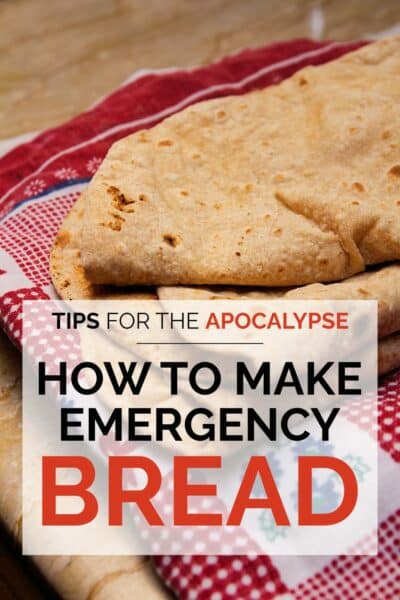
Begin by adding your flour to a bowl. If you’re not confident about eyeballing the amount, 2 cups, or 2 coffee mugs is a great place to start. Slowly add water a little at a time, mixing as you go. For emergency bread, you’re aiming for a thick, clumping dough – which in most cases uses only 1/4 as much water as there was flour. If you have salt, add a generous pinch.
Knead your dough for 5 minutes, and then leave it covered for 25 minutes. Once it’s had a chance to rest, separate your dough into walnut-sized balls. Sprinkle flour on a clean, flat surface and use a rolling pin to flatten each ball as thin as you can make it.
Making sure you’re in a well-ventilated area, use a camp stove, barbeque, or open fire to heat a pan and cook your emergency bread one piece at a time. Cook the bread on both sides. Continue until it forms blisters and/or it curls up at the edges. It may inflate and become balloon-like, which is fine. Keep an eye on it so it doesn’t burn. Depending on your cooking time, the end result may be crispy and crackerlike. This is totally fine! Just make sure you have water with it because it might be a little dry.
While I know this bread as ‘emergency bread’, in writing this article, I have discovered that it is also known as chapati and is a common staple in the Indian sub-continent. While technique and ingredients can vary somewhat, similar breads are known as roti, rotli, safati, sabaati, phulka, and roshi.
While most emergencies are resolved within 72 hours, it is possible for a disaster to knock a community out of ‘normal’ for weeks or even months. In the last few articles of this series, we discussed how to catch and prepare fish to eat. Fish are a great source of proteins and nutrients in an emergency. However, humans need a more balanced diet to thrive.
Gardening and agriculture are great ways to bulk out your long-term food supply. Fruits, vegetables, legumes, and tubers can all be grown in Canada. As anyone who has killed a few dozen house plants will tell you—it’s harder than it looks! Here are our top tips for growing your own food in an emergency.
Plants need 4 basic things to survive: sun, water, nutrients, and air. Different plants will need a different balance of these components. Search online or go to your local garden centre to see what plants will grow in your area, and in your specific garden. As a general rule of thumb, most edible plants like full sun (7+ hours of direct sunshine).
2) Practice
Dandelions might be able to grow through a crack in the sidewalk, but most plants are a little bit pickier. Practice developing your green thumb by planting your own garden or potted plant and trying to make it grow. You’ll find some plants suit your gardening style better than others. Try different options to see what will work for you. Personally, I tend to over-water my plants, so I have the most success with thirsty plants like berries and tomatoes.
3) Buy Your Seeds & Keep Them Current
Not all seeds are created equal. Many dollar stores will sell plant seeds, but in my personal experience a significant percentage of these ‘budget seeds’ are already dead and won’t sprout. I recommend sticking to those from your local garden center and keep an eye out for “Heirloom Seeds” as these are generally of a higher quality.
Seeds have varying shelf lives, depending on the plant. Seeds for beans, carrots, celery, chard, eggplant, peas, pumpkin, and squash can last up to five years if stored in a cool, dry place. Rotate your seeds after enough time has passed and replace them, or keep your garden blooming to have ready-access to grown foods.
4) Prepare for the growing time
Plants take time to grow. It will usually be several weeks before you can use them as a practical, sustainable food source. Be sure to store enough food to get you through this initial growth period. Cans of food, dry foods, and regularly rotated pastas/ready meals are great ways to bulk up your pantry. Don’t want to worry about changing out your expired food on time? Visit our Emergency Food Storage pages and pick up some XMREs or freeze-dried food. Some options have shelf lives of up to 25 years!
So how many potatoes does one person need to survive? Or carrots? Or lettuce? How do we know how many of any individual variety to plant in order to keep ourselves fed in an emergency?
Well, you can cultivate a garden for many years, carefully documenting how much it yielded in each season and whether you needed to plant more or less of each plant in the next year… OR you can check out this helpful chart from Garden Gate Magazine, where other people have done all that hard work for you.
Summary
Like so many other skills in life, the best way to become good at growing your own food is to practice doing it. Develop your skills, tools, and seeds BEFORE you need them. It’s always the best choice when preparing for an emergency situation. So, head on down to your local garden centre and bulk up your food storage options and you’ll feel ready for anything in no time!
This article was written by Zenia Platten – Author and emergency preparedness professional.
Last week, we wrote about the different ways to catch a fish in an emergency situation. But once you have used your pole, trap, trotline, or spear to catch a fish, how do you get it ready to eat? As it turns out, it’s a little more complicated than picking up a filet at the grocery store – but not by much.
*Disclaimer – this article contains the steps and descriptions for gutting a fish and may be unpleasant for some readers.
Congratulations! You have conquered nature and caught a fish. Your ancestors are smiling on you and your hunting prowess. Now it is time to get that fish ready to eat!
Preparing the fish is best done with a knife, but it you don’t have one handy, skip to the cooking section of this article.
While experienced anglers will sometimes filet their fish without gutting it, it is recommended for those new to fishing. Happily, it’s not rocket science. Here are the steps:
Make an incision in your fish from its anus, along its stomach, to the bottom of its jaw. Be careful not to cut too deeply, as the organs will be easiest to remove if they are intact.
You can remove the head completely, but cooking will be easier if you leave it on. Sever the tissue connecting the digestive tract and lungs to the head.
Reach in near the head and begin peeling out the organs. They should come out without much difficulty.
Once the body cavity is empty, wash the fish out with water.
That’s it! You now have a fully gutted and cleaned a fish. From here the fish can be filleted (separating the meat from the rest of the fish) or cooked as-is.
A new angler in a survival situation probably isn’t going to be filleting their fish, but cooking it whole. This avoids waste and minimizes the chance of cutting yourself if you are unused to handling a knife. There are three main components to cooking a fish in a survival situation: the fire, the stick, and the actual cooking process.
The fire
While it might be more satisfying to cook over an open flame, it is also the fastest way to get an unevenly cooked—or worse, burnt—fish. Instead, let your fire burn down to coals. Coals produce a more even heat for cooking. Want to learn more about making a fire, or see some tools to make it happen? Check out our other article on safely starting a fire and our hottest fire-starting products.
The stick
Find a stick that is small enough in diameter to fit through the fish’s mouth, but large enough to support the weight of it. It should be long enough that you can hold it over the fire without risk of burning yourself. Sharpen the end to a point. That’s it!
Cooking
Insert the stick through the fish’s mouth and push it straight towards the tail. Poke the pointed end just slightly through the back of the fish, just above the tail. Hold the fish over the coals, rotating occasionally to avoid burning.
The time it takes to cook your fish will vary depending on the heat of the coals, how close your fish is to them, and the size of the fish, but 15 minutes is average. When you check the fish it should be hot, and the skin should peel from the meat without issue. If either of these things aren’t true, increase cooking time.
If you weren’t able to gut your fish, you can still cook it and pick the meat off but beware that the organs can house parasites and other undesirables. The organs will also slow your cook time. For both reasons, it’s important to cook your fish for a lot longer if you can’t gut it first.*
*Total Prepare does not encourage anyone to eat ungutted fish, but we understand that in a survival situation, choices may be limited. If you’re going to do it, we want you to understand the risks and ways to make it safer.
Summary
In a survival situation, fish are an excellent source of nutrients and calories. If you missed our previous article on how to catch them, you can find that here.
Thank you for reading.
This article was written by Zenia Platten – Author and emergency preparedness professional.
 Total Prepare Inc, Canada’s number one source for emergency preparedness products, has created the